Florence, Italy: The Complete Travel Guide 2026
Why Florence?
There is a condition called Stendhal Syndrome — a psychosomatic illness triggered by exposure to too much art or beauty in a single place. Doctors first identified it in Florence. That probably tells you everything you need to know.
In roughly two square kilometres of pedestrian streets, Florence houses more UNESCO-listed art and architecture than any other city on earth. You can walk from Michelangelo's David to Botticelli's Birth of Venus to Brunelleschi's cathedral dome in under twenty minutes. Then you duck into a side street, order a lampredotto sandwich from a market cart, and lean against a fifteenth-century palazzo to eat it. Florence is simultaneously the most cultured and the most deliciously ordinary city in Italy — and that contrast is what makes it magnetic.
This guide is designed to help you see the highlights without surrendering entire mornings to queues, to eat where Florentines actually eat, and to find the quieter corners that most visitors walk straight past.
When to Visit
April–May and September–October are the sweet spots. Temperatures sit between 18°C and 25°C, the light is golden, and the crowds are manageable — though never thin. Advance booking for the Uffizi and Accademia is essential year-round.
June–August brings extreme heat (regularly 35°C+), peak tourist density, and higher prices. The city empties of locals in August and fills with visitors — a strange inversion. Arrive early at every site.
November–March offers 40–50% lower accommodation prices and genuinely uncrowded museums. Expect some rain and occasional cold snaps, but also the pleasure of having the Piazza della Signoria almost to yourself on a winter morning.
The Scoppio del Carro (Easter Sunday) and the Calcio Storico (late June — a brutal, centuries-old football match in Renaissance costume) are extraordinary if your dates align.
Getting There
By air: Florence's airport, Amerigo Vespucci (FLR), is small but well-connected to major European hubs. Alternatively, fly into Pisa (PSA) — 1 hour by train — or Bologna (BLQ) — 35 minutes by high-speed train — for more international routes.
By train: Florence Santa Maria Novella (SMN) station sits at the edge of the historic centre. High-speed Frecciarossa trains connect Florence to Rome (1h 30m, from €19), Milan (1h 45m, from €25), and Bologna (35m). From Rome, a day trip is very feasible — though a night or two lets Florence exhale.
From the airport to the city: The Vola in Bus shuttle runs every 30 minutes from FLR to Santa Maria Novella for €6. Taxis cost around €20–25 and take 20 minutes. Ride-shares are limited inside the ZTL (restricted traffic zone).
Getting Around
Florence's historic centre is almost entirely walkable — the Duomo to the Uffizi is a seven-minute stroll, and crossing the entire centre takes under half an hour on foot. This is one of the very few Italian cities where you genuinely do not need public transport to see the main attractions.
On foot: The default, and best, option. Wear comfortable shoes — the cobblestones are beautiful and merciless.
Electric scooters: Multiple operators (Helbiz, Dott) offer rentals via app. Watch the ZTL boundaries — enforcement cameras are everywhere and fines are steep.
Buses: ATAF runs an efficient city network. Single tickets cost €1.70 from tabacchi shops (€2.50 on board). Bus 13 from SMN station is the most useful for tourists staying near the Pitti Palace.
Taxis: Plentiful at official ranks (Santa Maria Novella, Piazza della Repubblica). Starting fare: €3.30 daytime, €6.60 at night. Never hail from the street — only use official taxi ranks or apps (itTaxi, AppTaxi).
The ZTL: Most of the historic centre is a Zona a Traffico Limitato — private cars are banned 7:30am–8pm on weekdays and 7:30am–8pm Saturdays. Your hotel can arrange a permit if you're arriving by car.
Where to Stay
Centro Storico (Historic Centre)
Staying inside the ZTL puts you within walking distance of everything. It's the most convenient option but also the priciest.- Budget: Ostello Archi Rossi (€25–40/bed in dorms) — a legendary Florentine hostel just 200m from SMN station, with murals painted by past guests covering every wall.
- Mid-range: Hotel Davanzati (€130–200/night) — a family-run gem on a quiet street near Piazza della Repubblica with surprisingly large rooms for the price.
- Splurge: Portrait Firenze (€600–1,200/night) — a converted noble palazzo on Lungarno Acciaiuoli with Arno views. Worth it for a special occasion.
Oltrarno
The south bank of the Arno is Florence's coolest neighbourhood — artisan workshops, wine bars, fewer tourists, and a much more lived-in atmosphere. Walking to the Uffizi takes 15 minutes across Ponte Vecchio.- Mid-range: Soprarno Suites (€120–170/night) — beautifully designed apartments in a 19th-century building with exposed beams and a terrace overlooking Piazza Santo Spirito.
Santa Croce
Lively in the evenings, with good restaurant options and slightly more affordable accommodation than the Duomo area.- Mid-range: Hotel Perseo (€90–140/night) — bright, clean rooms and very friendly staff.
Top Attractions
1. Galleria degli Uffizi
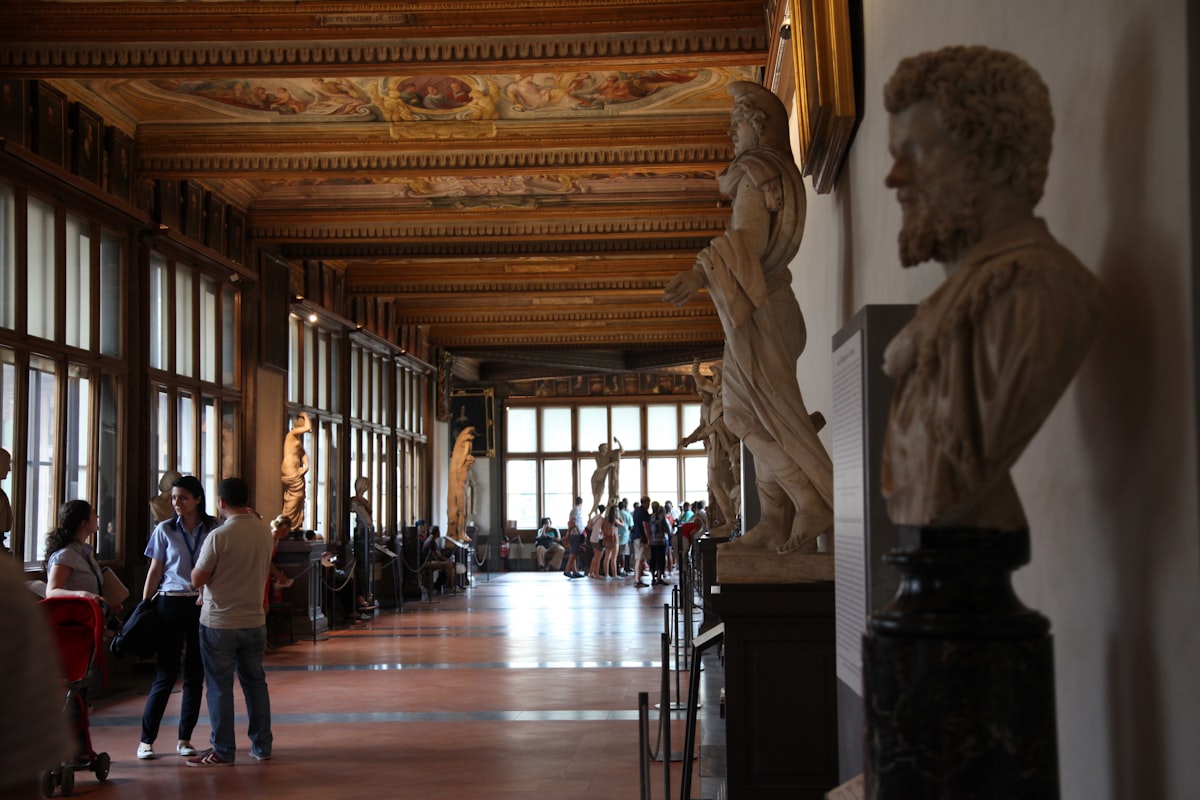
The Uffizi is arguably the finest collection of Renaissance art anywhere in the world. Botticelli's Birth of Venus and Primavera, Leonardo's Annunciation, Raphael's portraits, Caravaggio's Medusa — it is overwhelming in the best possible sense.
Tickets: €25 (€16 after 4pm — one of the best value tricks in Florence). Book at least two weeks ahead at uffizi.it; same-day tickets are almost always sold out by 9am. Allow 3–4 hours.
Tip: The Uffizi has two buildings connected by an elevated corridor. Many visitors miss the second building entirely — it contains some of the best Flemish and Northern European works in the collection.
2. Galleria dell'Accademia — Michelangelo's David
No photograph has ever done the David justice. At 5.17 metres tall and carved from a single block of marble between 1501 and 1504, it is a work of impossible perfection — the tension in the neck, the slightly oversized hands (a deliberate perspective trick for viewing from below), the extraordinary calm in the eyes of a man about to face a giant.
Tickets: €20. Book ahead at accademia.org. Tuesday to Sunday; closed Mondays.
Tip: Arrive right at opening (8:15am) on a weekday and you can stand alone in front of the David for a few minutes. By 10am the rotunda is packed.
3. The Duomo Complex
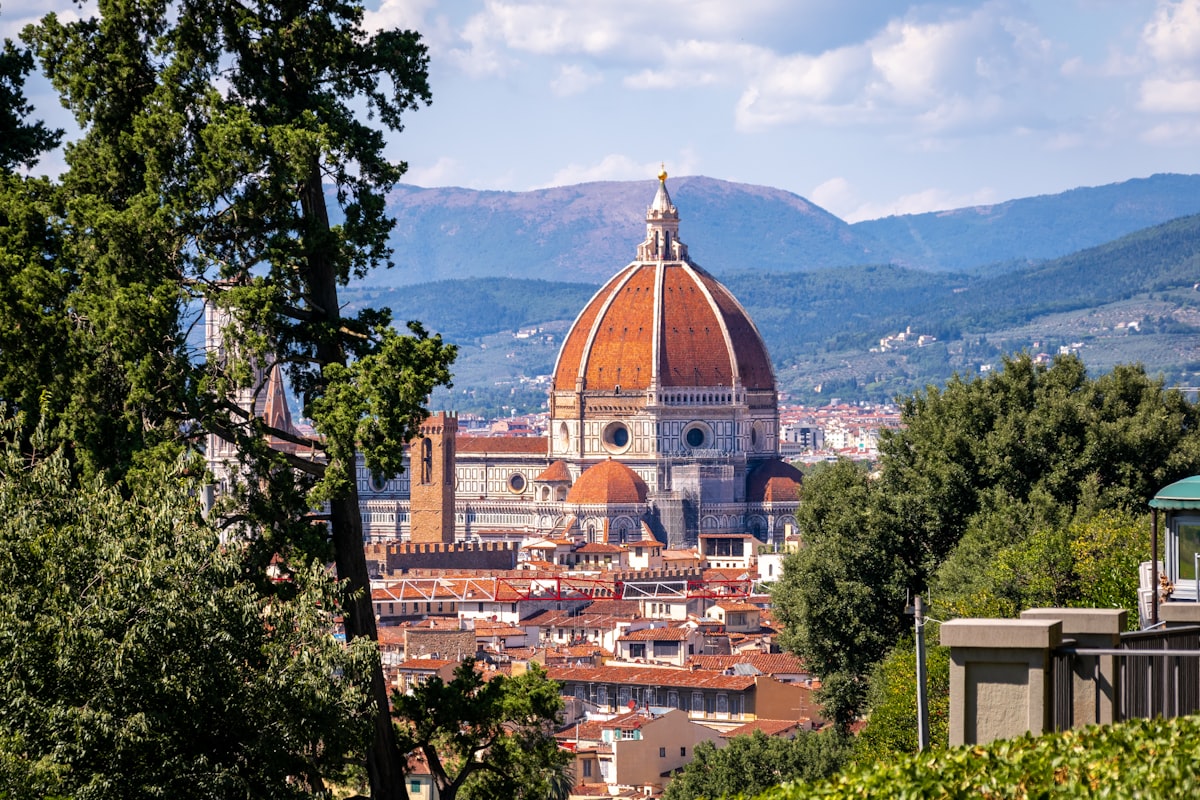
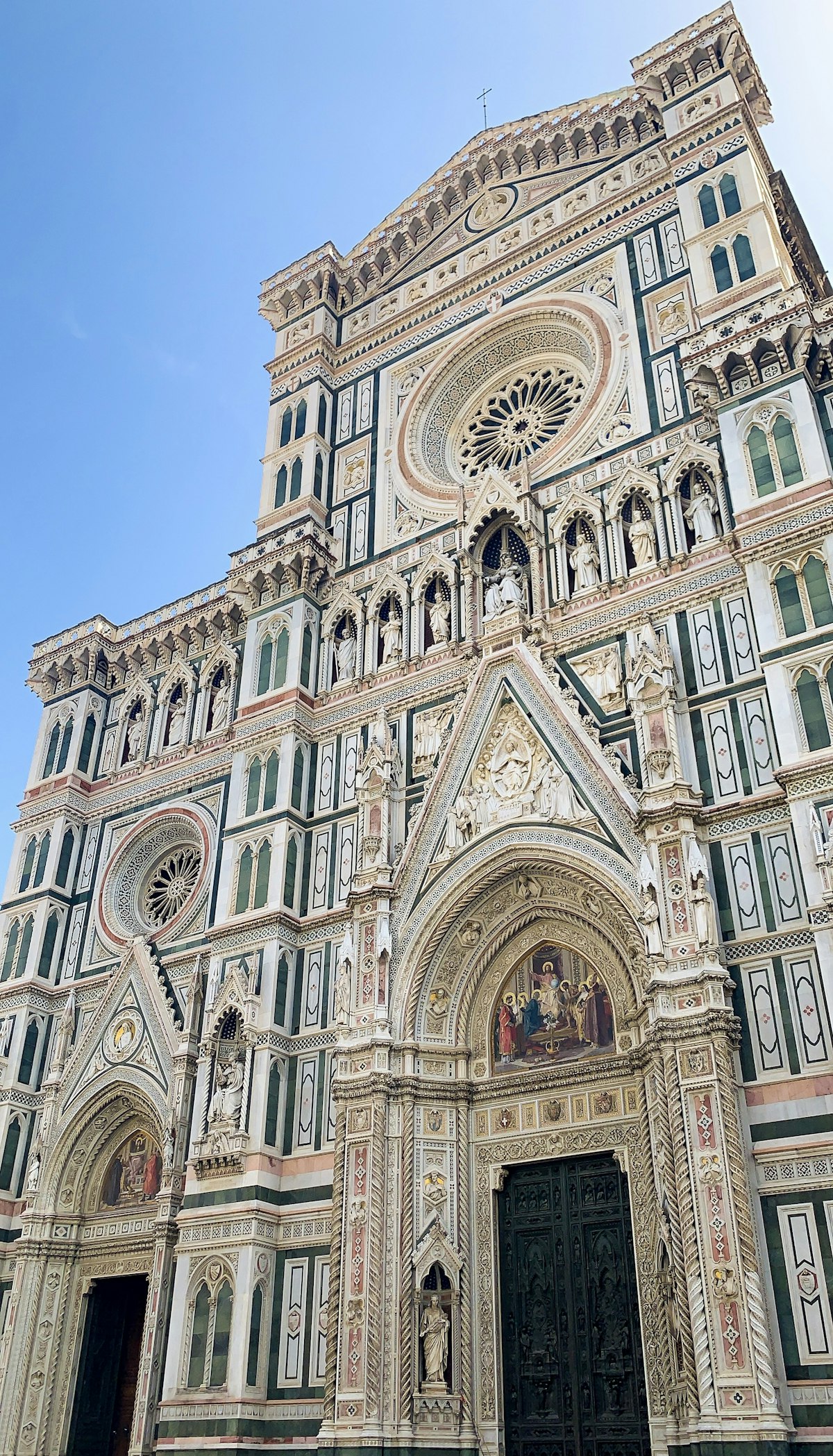
Florence's cathedral, Santa Maria del Fiore, dominates the city skyline from every direction. Brunelleschi's dome — completed in 1436 without the use of scaffolding, using a double-shell brick technique he invented on the spot — remains one of the great engineering achievements of human history.
The combined Opera del Duomo ticket (€20) covers the cathedral, the dome climb (463 steps), Giotto's Campanile (414 steps), the Baptistery, and the underground excavations. It is valid for 72 hours. Book at museumflorence.com.
Climb the dome, not just the Campanile. The views from the top are spectacular, but more importantly you walk between the inner and outer shells and see Vasari's Last Judgment frescoes at close range from the internal gallery — a perspective that has not changed since the 16th century.
4. Ponte Vecchio
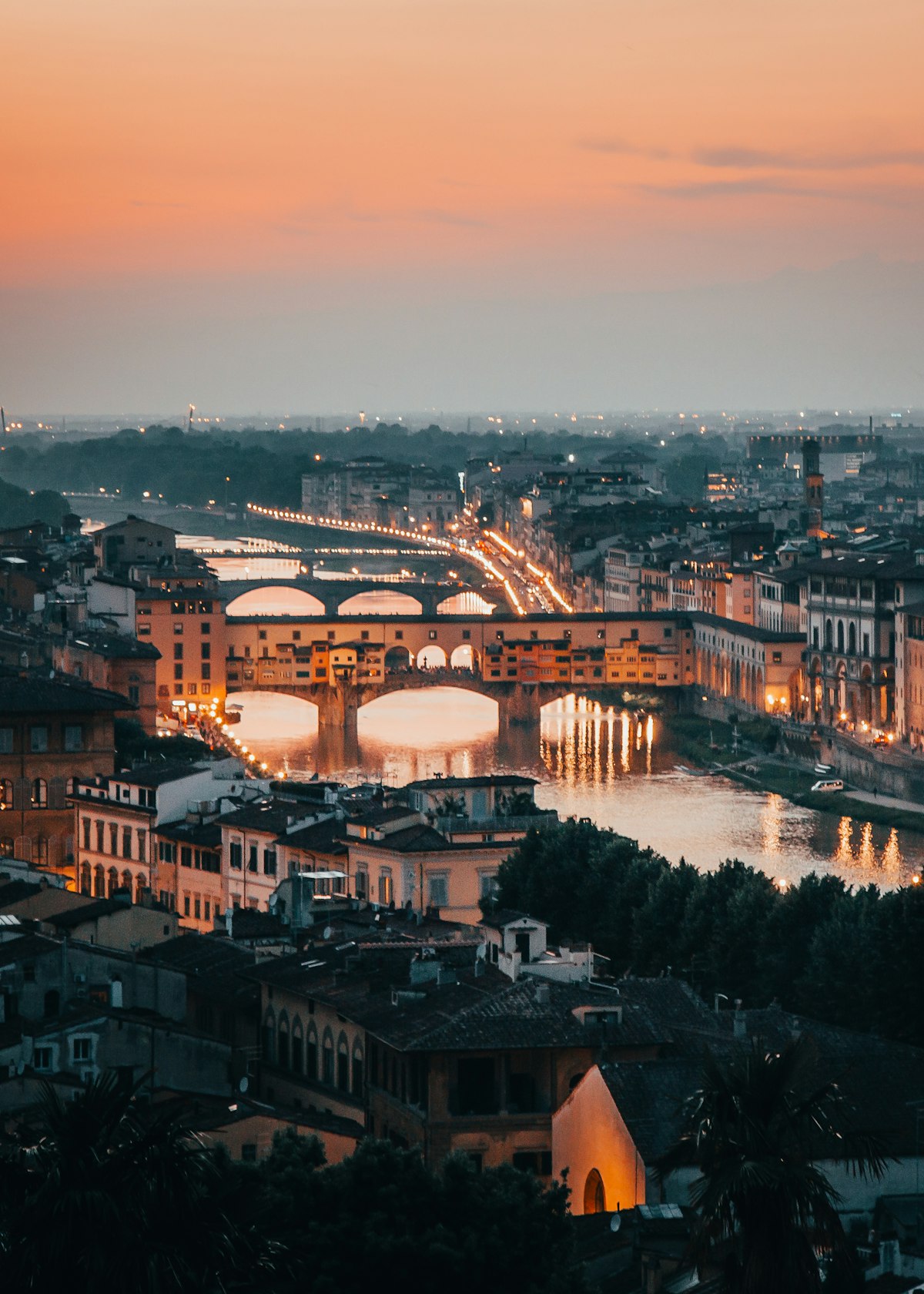
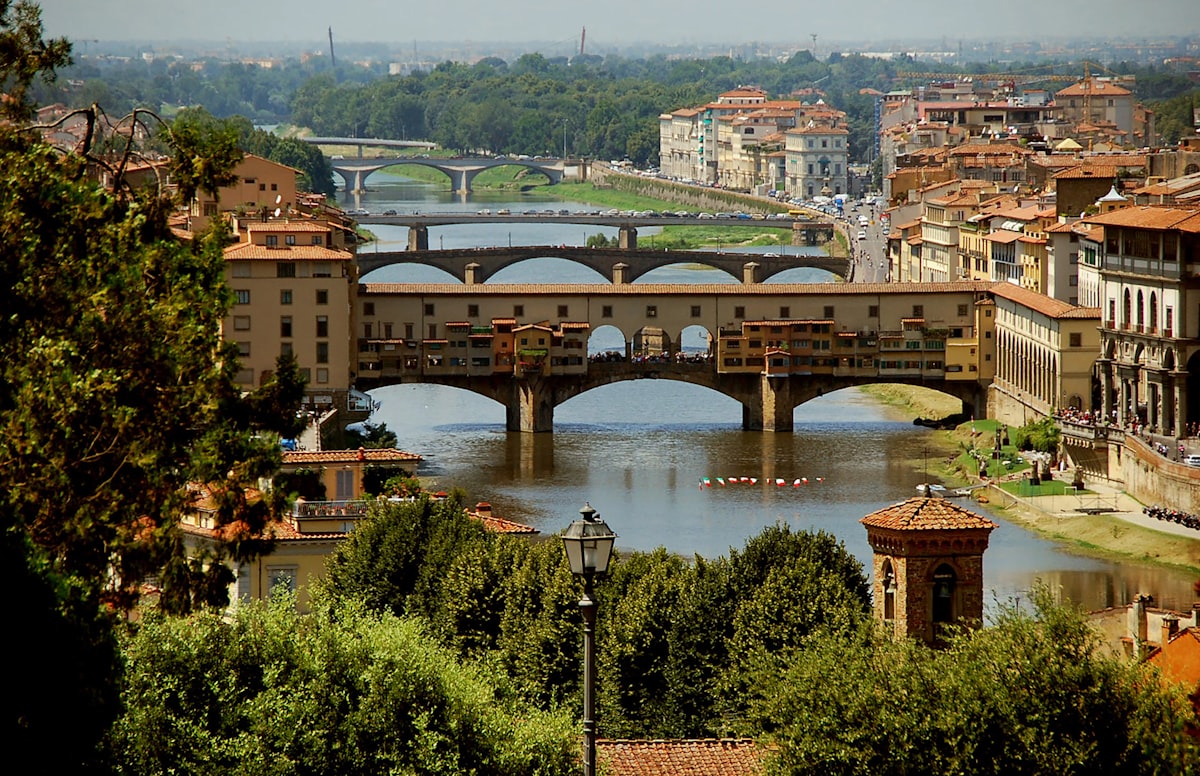
Built in 1345 and the only Florentine bridge not destroyed by the retreating German army in 1944 (reputedly because Hitler ordered its preservation), Ponte Vecchio is lined with jewellery shops that have occupied it since the 16th century. The Medici family used the elevated Corridoio Vasariano above the shops to travel between the Palazzo Vecchio and Pitti Palace without mixing with the public.
The bridge is most beautiful at dawn, before the shops open, when you can stand at the centre parapet and watch the Arno light up gold. Cross it at any time of day but linger at the northern end, where the view up the river toward the other bridges is one of those views that explains why people fall in love with cities.
5. Piazzale Michelangelo
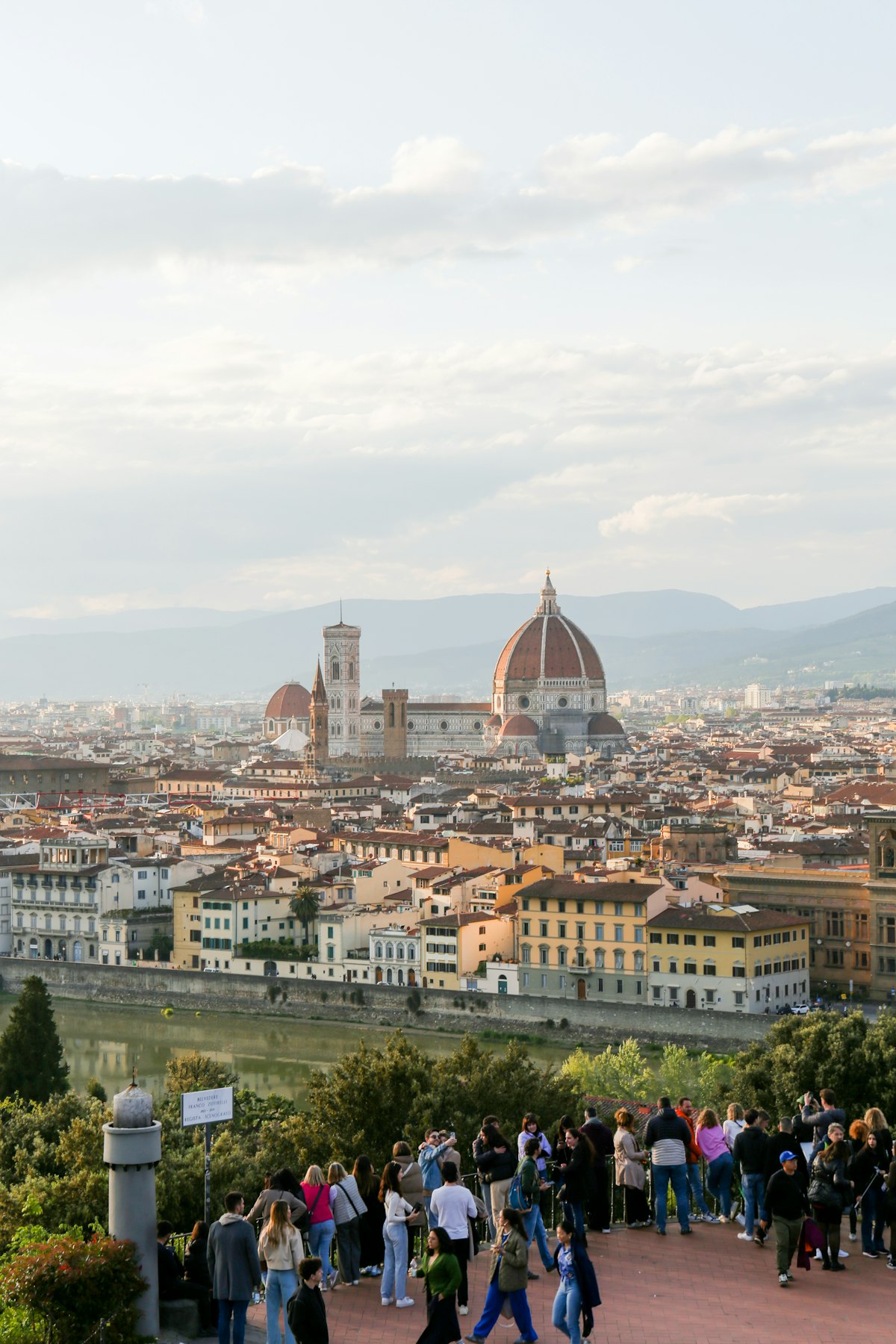
Perched on a hill south of the Arno, this wide terrace offers the most photographed view in Florence: the entire skyline — Giotto's Campanile, the dome, the Palazzo Vecchio tower, the hills of Fiesole beyond — laid out in a single sweep. Arrive 30 minutes before sunset, when the stone turns amber and the tour groups thin out.
The walk up from Ponte Vecchio takes about 20 minutes through the Giardino Bardini or along the Via di San Miniato al Monte. Both routes are lovely. There is also bus 13 from SMN station.
6. Palazzo Pitti & Boboli Gardens
The Pitti Palace is the largest palazzo in Florence and houses multiple museums across its sprawling floor plan. The Palatine Gallery (€16–22 combined ticket) contains perhaps the finest collection of Raphael outside the Vatican, plus Titans and Rubens hanging in rooms that still look like a royal residence.
Behind the palace, the Boboli Gardens (€10) are a 16th-century Italian Renaissance garden of terraces, fountains, citrus trees, and ancient marble statues. Come at opening time — by 11am they fill up. The views from the upper terraces across the rooftops back toward the Duomo are quietly sensational.
Hidden Gems
Cappella Brancacci — Masaccio's Frescoes
Inside the church of Santa Maria del Carmine in Oltrarno, this small chapel contains frescoes that changed the course of Western art. Masaccio painted them in the 1420s — 70 years before Leonardo or Michelangelo were born — using a naturalism and emotional depth that had not been seen since antiquity. Michelangelo himself came here to study them as a student.
Only 30 visitors are allowed inside at once, in 15-minute timed slots. Book at museicivicifiorentini.comune.fi.it. The intimacy is part of the experience.
Bargello — The Greatest Sculpture Museum Nobody Visits
While crowds queue for the Uffizi, the Bargello — a 13th-century fortress two minutes' walk away — houses the finest collection of Renaissance sculpture in Italy and rarely has more than a handful of visitors. Donatello's bronze David (the first freestanding male nude since antiquity), Michelangelo's early Bacchus, Cellini's extraordinary Perseus model — all here, often with the room essentially to yourself. Tickets: €10. Closed Tuesdays.
Giardino Bardini
While Boboli heaves with visitors, the adjacent Bardini Garden quietly offers some of the best views in Florence from its terraced hillside, a wisteria-covered pergola in spring, and an 18th-century villa. Tickets: €10 (free with Boboli ticket). Often near-empty even at midday.
Oltrarno — The Authentic South Bank
Cross the Arno and follow Via Maggio or the Via de' Serragli into the Oltrarno quarter. This is where Florentines actually live. The streets are lined with artisan workshops — leatherworkers, picture framers, restorers of antique furniture — many operating in the same premises for three or four generations. Piazza Santo Spirito is the neighbourhood's living room: a farmers' market on Thursdays, a flea market on the second Sunday of each month, and the best aperitivo scene in the city every evening.
Palazzo Davanzati
A perfectly preserved 14th-century townhouse on Via Porta Rossa, Palazzo Davanzati shows you what wealthy Florentine domestic life looked like in the Middle Ages — painted walls, suspended loggia, primitive bathrooms, and medieval kitchen. Entry: €6. Almost always quiet. An hour here is worth more than the third hour in most major museums.
Where to Eat and Drink
Breakfast
Florescence wakes up to a cornetto (Italian croissant) and a macchiato at the bar. Stand at the counter — it is cheaper and what locals do. Try Caffè Gilli (Piazza della Repubblica, since 1733) for a historic experience, or the tiny neighbourhood bars in Oltrarno for zero tourist markup. Coffee: €1.20–1.80 at the counter.Street Food
Lampredotto is Florence's street food soul — a sandwich made from tripe (the fourth stomach of the cow) braised in a rich broth and tucked into a semelle bun. The city's best is debated with religious intensity. Nerbone inside the Mercato Centrale (open since 1872) and Tripperia Pollini in Sant'Ambrogio market are pilgrimage-worthy starting points. A sandwich: €5–7.For something less confrontational, the Mercato Centrale (ground floor, not the tourist-trap food hall upstairs) has excellent fresh pasta, cheese, cured meats, and produce at honest prices.
Budget Trattorias
- Trattoria Mario (Via Rosina 2, near Mercato Centrale): Cash only, shared tables, no menu — you eat whatever they cook that day. Lunch only, arrives busy, queues out the door. Pasta around €7, secondi €9. Worth every minute of the wait.
- Il Latini (Via dei Palchetti 6): Boisterous, communal tables, hanging prosciuttos, abundant wine. Book ahead. Full meal with wine: €30–35.
Mid-Range
- Buca Mario (Piazza degli Ottaviani 16): Florence's oldest restaurant (1886). Bistecca alla Fiorentina — the T-bone steak that defines Tuscan cooking — done properly. Steak: €45–55 for two (priced by weight).
- Osteria dell'Enoteca (Via Romana 70, Oltrarno): Refined Tuscan cooking without the tourist premium. Seasonal menu, excellent wine list. €45–60 per person including wine.
Wine Bars
- Enoteca Borgheri (Via Ghibellina 3): A neighbourhood wine bar that feels unchanged since 1968. Local wines by the glass from €4, cicchetti to accompany them.
- Il Santino (Via di Santo Spirito 60): The wine bar sibling of the acclaimed Santo Bevitore. Natural wines, outstanding charcuterie and cheese plates. Excellent early evening stop.
Gelato
Florence has both excellent and terrible gelato in roughly equal measure. The tell: real gelato is stored in covered metal tubs, not piled in fluorescent mountains. Gelateria dei Neri (Via dei Neri), Gelateria Fico (Via dei Serragli, Oltrarno), and Gelateria Sbrino (Piazza Beccaria) are reliable. A two-scoop cone: €2.50–3.50.Practical Travel Tips
Book in advance. The Uffizi and Accademia both sell out days (often weeks) ahead, especially April–October. Booking fees are small (€4–5) and entirely worth it. Use official museum websites only — third-party "skip the line" tours charge 2–4x the ticket price for the same entry.
Visit late. The Uffizi's reduced ticket (€16 after 4pm) is one of travel's great deals. Museums are quieter, and the late-afternoon light through the gallery windows is beautiful. Many sites are open until 6:30pm or later in summer.
The Florence Card (€85 for 72 hours) covers 60+ sites including unlimited public transport and queue priority. It pays off if you plan to visit four or more major attractions in three days — do the maths for your specific itinerary.
Dress for churches. Shoulders and knees must be covered to enter the Duomo, Santa Croce, and other churches. A light scarf or sarong weighs nothing and saves embarrassment.
Visa requirements: EU citizens need only a national ID card. UK citizens can stay up to 90 days without a visa. Indian citizens require a Schengen visa (apply well in advance at the Italian consulate). US and Canadian citizens: 90-day visa-free stay.
Currency: Euro (€). Florence is essentially cashless for most transactions, but smaller trattorias, market stalls, and the best bars often prefer or require cash. Keep €20–30 on you.
Tipping: Not expected in Italy. At restaurants, rounding up or leaving €1–2 per person is generous and appreciated. Never expected.
The ZTL: If arriving by car or rental, do not drive into the historic centre. The cameras are automatic and fines (€80–€300) arrive at home weeks later. Park at Piazzale Michelangelo (free) or Parterre (paid) and walk in.
Sample 3-Day Itinerary
Day 1: The Renaissance Core
Morning: Galleria dell'Accademia at 8:15am (pre-booked). David, then the museum's collection of musical instruments and plaster casts. Out by 10am before the crowds.Mid-morning: Walk to the Duomo. Climb the dome (book your slot for mid-morning). The views and the frescoes up close are unmissable.
Lunch: Trattoria Mario. Cash, shared tables, extraordinary value.
Afternoon: Uffizi Gallery (pre-booked, 2pm slot). Allow three hours minimum.
Evening: Aperitivo on Piazza della Repubblica or at a wine bar on Via de' Benci. Dinner at Il Latini or a trattoria on the side streets of Santa Croce.
Day 2: The Arno South Bank
Morning: Cross Ponte Vecchio at dawn. Walk up to Piazzale Michelangelo for the city view, then continue to the Romanesque church of San Miniato al Monte (free, extraordinary, almost nobody goes).Mid-morning: Palazzo Pitti and Palatine Gallery (2–3 hours).
Lunch: Picnic in the Boboli Gardens with supplies from the Mercato di Santo Spirito.
Afternoon: Cappella Brancacci (pre-booked). Then wander the Oltrarno artisan streets — Via Maggio, Borgo San Frediano.
Evening: Aperitivo at Il Santino. Dinner in Oltrarno — Osteria dell'Enoteca or any of the trattorias around Piazza Santo Spirito.
Day 3: Hidden Florence
Morning: Bargello (open 8:15am). Donatello's David and Michelangelo's early works in near-solitude.Mid-morning: Palazzo Davanzati (€6, 30 minutes, fascinating).
Lunch: Lampredotto sandwich from Nerbone in Mercato Centrale.
Afternoon: Giardino Bardini. Then the church of Santa Croce (€8) — Michelangelo's tomb, Machiavelli's tomb, Galileo's tomb, Dante's cenotaph, and Giotto frescoes, all in one Gothic basilica.
Evening: Final gelato at Gelateria dei Neri. Walk the Lungarno at dusk — the view of the illuminated Ponte Vecchio from further downstream is the best in the city.
Budget Breakdown
Budget Traveller (hostel + street food + off-peak museum visits): ~€70–90/day
- Hostel dorm: €25–35
- Food: €20–25 (cornetto + coffee, lampredotto sandwich, supermarket dinner)
- Museums: €15–20 (2 sites, late-afternoon tickets where possible)
- Transport: €0–5 (mostly walking)
Mid-Range (B&B or 3-star hotel + trattorias + planned museums): ~€200–280/day
- Accommodation: €110–160
- Food: €50–70 (breakfast, trattoria lunch, osteria dinner)
- Museums: €30–40 (3 sites, advance booking)
- Transport: €10
Luxury (boutique hotel + fine dining + private experiences): €600–1,200+/day
- Accommodation: €400–900
- Food: €150–200
- Private museum access/guided tours: €100–200
Entry Fee Summary (2026)
| Attraction | Price |
|---|---|
| Uffizi Gallery | €25 (€16 after 4pm) |
| Galleria dell'Accademia (David) | €20 |
| Duomo complex (dome + baptistery + etc.) | €20 |
| Palazzo Pitti + Boboli Gardens | €22 |
| Bargello | €10 |
| Cappella Brancacci | €10 |
| Giardino Bardini | €10 |
| Palazzo Davanzati | €6 |
| Santa Croce | €8 |
| Florence Card (72hr, 60+ sites) | €85 |
Final Thoughts
Florence is a city that rewards slowness. The visitors who try to see everything — racing from the Uffizi to the Accademia to the Duomo in a single jet-lagged day — leave exhausted and with a vague sense of missed depth. The ones who spend two unhurried hours in the Uffizi, sit in a piazza for forty-five minutes over a single glass of Chianti, and stumble into a half-empty church because the door happened to be open — those are the ones who go home changed.
Book your big museums early. Stay on the south bank at least one night. Eat where there is no English menu outside. And climb something — the dome, the Campanile, the stairs to Piazzale Michelangelo — because Florence has to be seen from above to be fully understood.
When you stand at the top of Brunelleschi's dome and look out over the terracotta rooftops stretching to the Tuscan hills, you will understand, viscerally, why people have been making this pilgrimage for six hundred years.