Santorini, Greece: The Complete Travel Guide 2026
Formed by one of the largest volcanic eruptions in recorded history — around 1600 BCE — Santorini is unlike anywhere else in the Mediterranean. The island's flooded caldera gives it a dramatic horseshoe shape and those impossibly blue views that have launched a thousand travel campaigns. But Santorini is more than its Instagram silhouette: it's a Bronze Age archaeological site that rivals Pompeii, volcanic beaches in red, black, and white, Greece's finest white wine grown in 3,500-year-old basket-trained vines, and whitewashed villages that spill over clifftops like frozen waterfalls.
Yes, it's expensive. Yes, July and August are overwhelming. But visit in May, June, or September — stay in Firostefani instead of Oia, eat in Pyrgos, hire an ATV for a day — and you'll find one of the Mediterranean's genuinely great islands at a fraction of the peak price.
Why Santorini?
Three things set Santorini apart from every other Greek island.
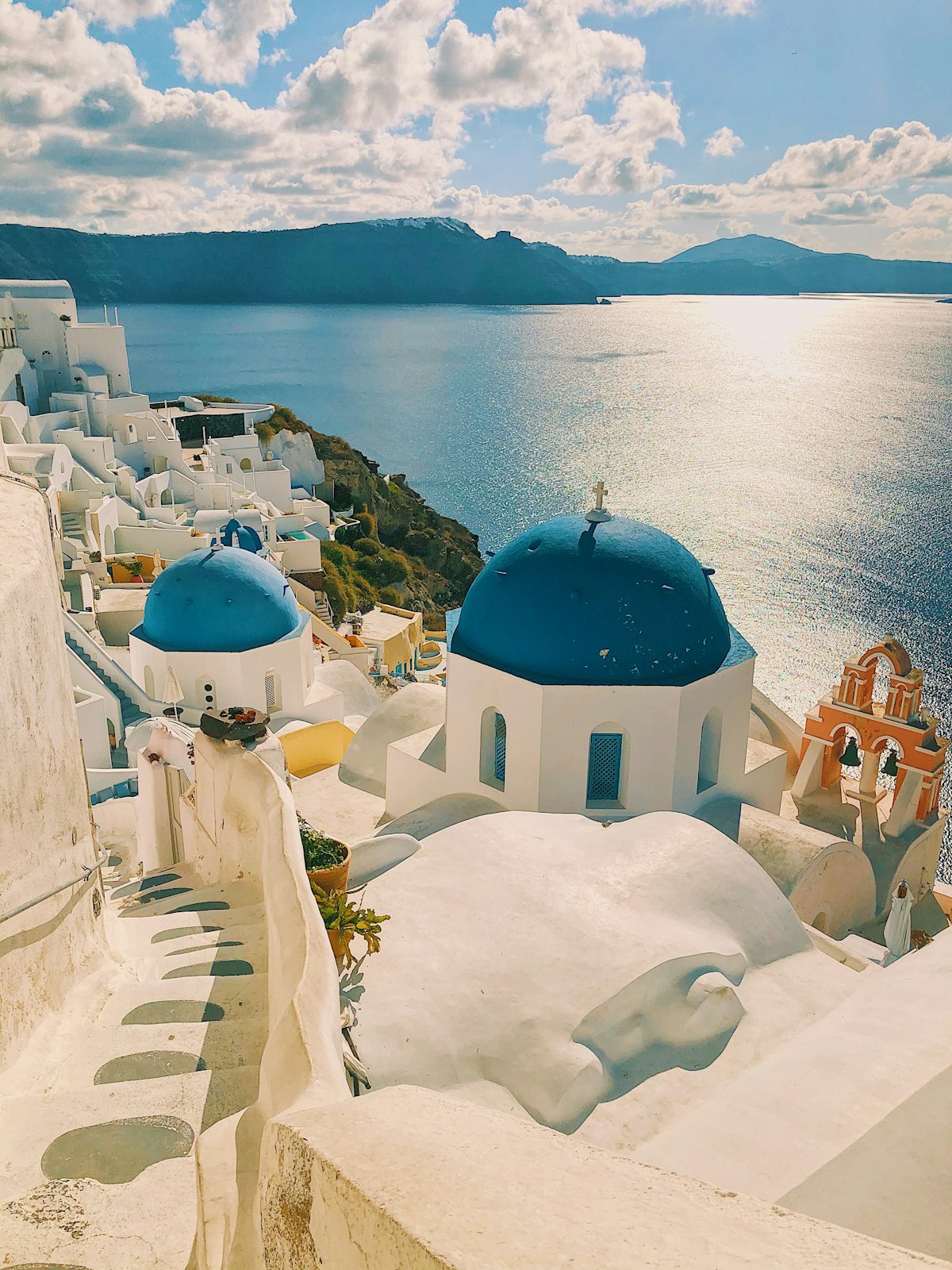
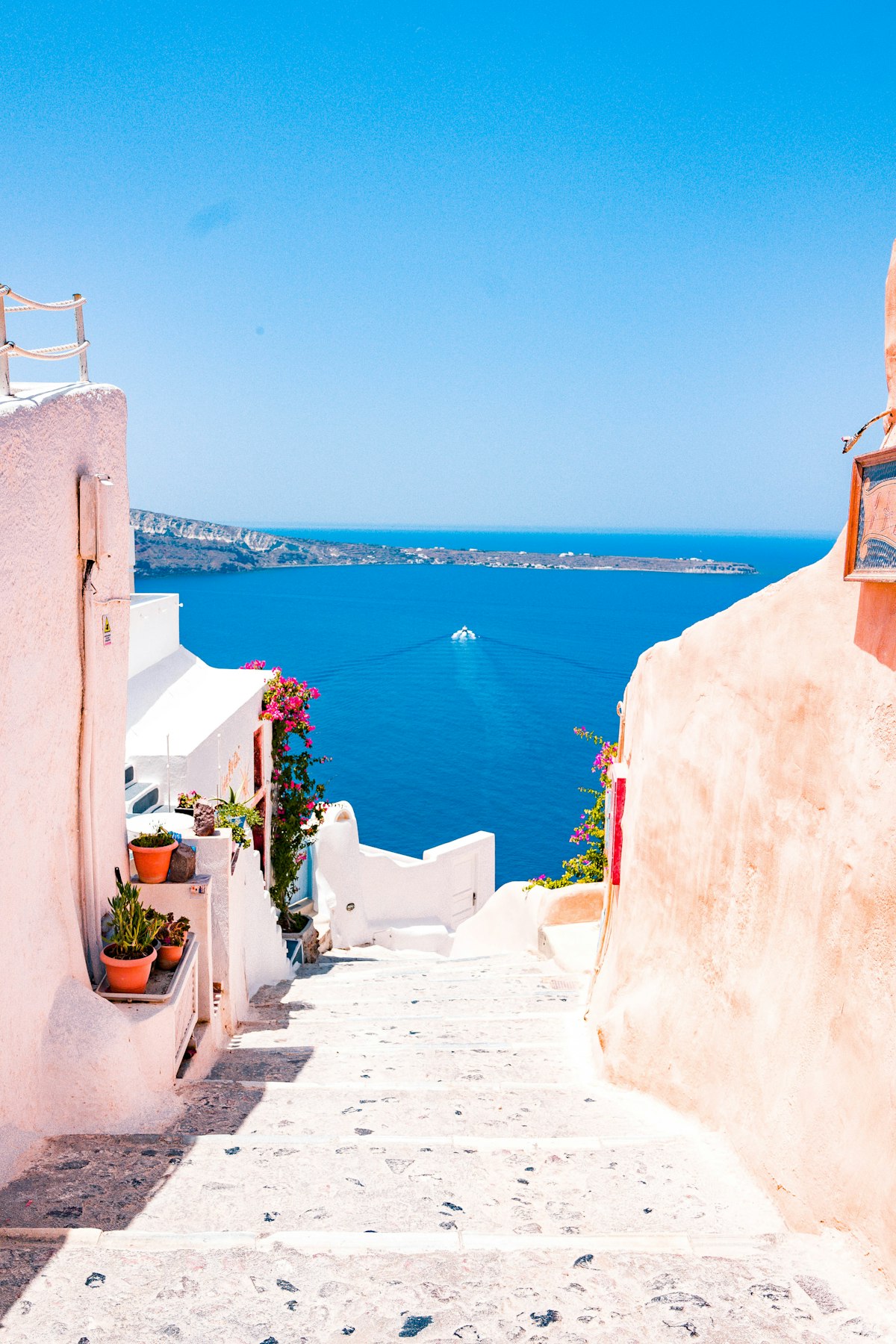
The caldera. A volcanic collapse created a water-filled crater 12 km wide, ringed by 300-metre cliffs. Villages cling to the rim; sunsets paint the whole thing amber and rose. No photograph quite prepares you for the first time you look down into it.
The archaeology. Akrotiri, buried under volcanic ash in 1600 BCE and rediscovered in 1967, is one of the best-preserved Bronze Age cities on earth. Two-storey buildings, indoor plumbing, vivid frescoes, and a grid street plan — all sealed under pumice for 3,600 years.
The wine. Santorini's Assyrtiko grape, grown in ancient basket-shaped vines that protect against the island's fierce winds, produces a bone-dry white with minerality, citrus, and a saline finish that wine critics compare to Burgundy's Chablis. Visiting a winery here is a genuinely unmissable experience.
When to Visit
May and June (best): 23–27°C, wildflowers still visible, hotels 30–40% cheaper than peak, and the Fira–Oia trail is walkable without sunrise alarms. Ferry and flight bookings are straightforward.
September and October (excellent): The sea is its warmest (24–26°C), crowds have thinned considerably, and the grape harvest brings a festive atmosphere to the wineries. October is ideal if you want near-deserted archaeological sites.
July and August (peak): Hot (30–35°C), extremely crowded — Oia's sunset point fills an hour before dusk. Prices are 50–60% above shoulder season. Book everything 3–6 months ahead or you'll be disappointed.
Winter (November–March): Most hotels, restaurants, and tourist services close. The island is quiet and raw. A handful of properties and tavernas remain open year-round for those who want Santorini entirely to themselves.
Festivals to time your trip around: The Ifestia Festival in late August stages a spectacular pyrotechnic re-enactment of the volcanic eruption, visible from the caldera. Orthodox Easter (dates vary) fills the villages with candlelit processions — one of Greece's most atmospheric celebrations.
Getting There
By air: Santorini International Airport (JTR) has direct summer flights from Athens (45 min, from €50 with Aegean Airlines or Olympic Air) and direct European routes from London, Berlin, Amsterdam, Rome, and more on easyJet, Ryanair, and Wizz Air. Book 2–3 months ahead for summer; last-minute fares regularly exceed €300 each way.
By high-speed ferry from Athens (Piraeus): SeaJets and Hellenic Seaways run catamarans that take 4.5–5 hours (€80–120). Conventional car ferries take 7–8 hours (€40–60) and are the budget option — an overnight crossing saves a night's accommodation. Book on Ferryscanner, Ferryhopper, or directly with operators.
By ferry from other Cyclades: Mykonos (2.5 hrs, €35–80), Naxos (2 hrs, €28–70), Ios (1 hr, €20–55). Island-hopping from Athens via Mykonos → Naxos → Santorini is a classic 10-day Greek trip.
From the port of Athinios: KTEL buses meet arriving ferries (€1.80 to Fira); taxis queue outside (€12–20 to Fira); or pre-book a private transfer (€20–30).
Getting Around
KTEL bus: Covers Fira ↔ Oia, Fira ↔ Perissa, Fira ↔ Kamari, Fira ↔ Akrotiri. Fares €1.80–2.30. Timetables thin out after 21:00 and on Sundays. Buy tickets at the Fira bus terminal (the main hub, just south of the central square).
ATV / scooter: The most popular option for independent travellers. Available across the island from €25–35/day. The main road loops the entire island (73 km); a half-day gets you from Fira to both the northern tip (Oia) and the southern beaches (Akrotiri, Red Beach). Helmets are mandatory and traffic police enforce it.
Car hire: €40–70/day. Useful if you want to carry beach gear or visit multiple wineries without heat. Parking in Oia village is nearly impossible in summer — leave the car at the car park on the northern approach and walk in.
Taxis: €8–20 for most intra-island journeys. Shared taxis (arrange at the Fira taxi rank) cut the cost significantly. Always agree the fare before you get in.
Cable car (Fira ↔ Old Port): €6 each way. Queues in peak season can exceed 30 minutes. The alternative is 588 steps — free, used by donkeys, and genuinely charming at dawn before the crowds. A third option: ferry from Athinios directly to the Old Port and cable car up.
Where to Stay
Oia (Luxury and Romance)
The most photographed village on the island commands a premium. Caldera-view suites start at €250/night in shoulder season and regularly exceed €500 in July and August. Recommended properties: Katikies Iconic Santorini (cave suites with private plunge pools), Canaves Oia Suites (impeccable service, classic caldera views). If you can afford Oia, budget for at least two nights — you want to see the famous sunset from your terrace on a night when you're not exhausted from a travel day.
Fira (Best Base, Mid-Range)
The island's capital offers the most accommodation choice and is the central transport hub. Cave house hotels with caldera views from €120–200/night in shoulder season. Recommended: Aressana Spa Hotel and Suites (excellent pool, good central location), Archipelagos Hotel (caldera-rim position at a fair price).
Firostefani and Imerovigli (Best Value Caldera Views)
These two villages sit between Fira and Oia on the caldera rim, offering the same dramatic panoramas at prices 20–30% below Oia. Almost no one mentions them, which makes them exactly where savvy travellers should stay. Recommended: Chromata Hotel (Imerovigli, stunning infinity pool over the caldera), Belvedere Hotel (Firostefani, excellent mid-range option with pool).
Kamari and Perissa (Budget, Beachside)
On the eastern coast with no caldera views but good black-sand beaches and affordable tavernas. 3-star hotels from €60–90/night in shoulder season, perfect for beach-focused or family trips.
Top Attractions
Oia Village
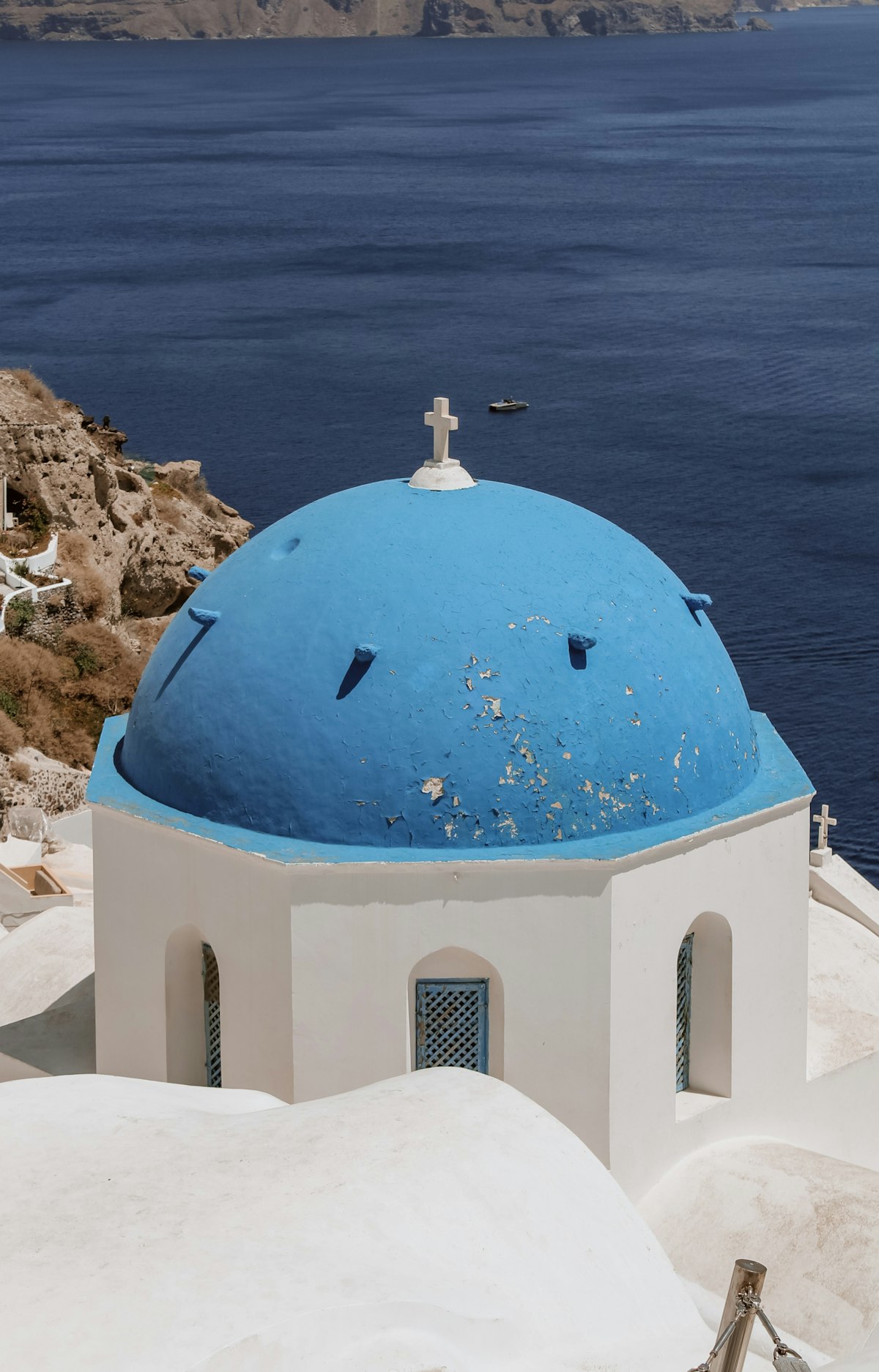
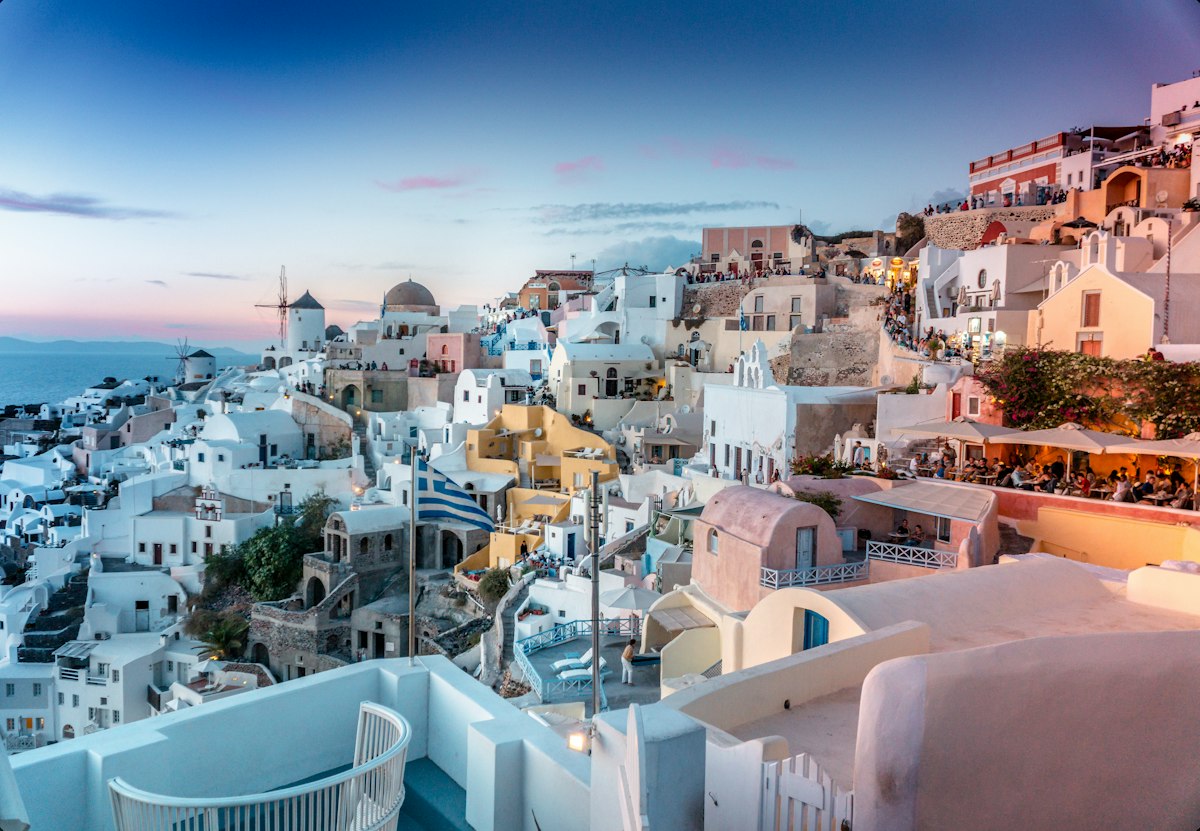
The village that launched a thousand travel blogs and counting. Wander the marble-paved caldera path in the morning — before 09:00 in summer — before the tour group buses arrive. The windmills at the northern tip, the ruined Venetian kastro, the blue-domed churches of Agios Spyridon, and the captain's mansions (many now boutique hotels) all reward slow exploration. Save the famous sunset for the castle ruins — arrive 90 minutes early to secure a spot. The vantage point fills completely, and latecomers end up watching from behind the crowd.

Caldera Boat Tour
A 5–7 hour boat trip is non-negotiable. Tours depart from Ammoudi Bay (the fishing harbour below Oia) or the Old Port below Fira, costing €35–70 per person. The typical route visits:
- Nea Kameni — the active volcanic islet; hike to the still-smoking crater (€8 landing fee). The sulfur smell is intense and entirely wonderful.
- Palea Kameni hot springs — swim in amber-coloured warm water heated by volcanic activity (€3 landing fee).
- Therasia — the quieter western island with a small village, arguably what Santorini looked like 40 years ago.
- White Beach and Red Beach — swim stops at two of the most dramatic beaches on the island.
Half-day tours include a meal onboard and are the better value. Book the day before at the port or through your hotel.
Akrotiri Archaeological Site
Regularly called "the Minoan Pompeii," Akrotiri was a prosperous Bronze Age trading city of several thousand inhabitants, buried under a 30-metre layer of volcanic pumice around 1600 BCE. The excavation — still ongoing — has revealed two- and three-storey buildings, a sophisticated drainage system, wall paintings depicting blue monkeys, boxers, and antelopes, and storage jars (pithoi) still standing where they were left the day the volcano erupted.
The entire site is under a protective roof, so it's comfortable in any weather. Chronically underrated by visitors who prioritise Oia's sunset: allocate at least 90 minutes here.
Hours: Daily 08:00–20:00 (Mondays and Thursdays close at 15:30). Entrance: €20. EU citizens under 25: free. A combined ticket (€14) covers Akrotiri, Ancient Thera, the Museum of Prehistoric Thera, and the Byzantine Museum in Pyrgos.
Fira to Oia Caldera Hike
The 10.5 km caldera-rim trail connects Fira with Oia via Firostefani and Imerovigli. Allow 3–4 hours at a relaxed pace. Views are extraordinary throughout: the sheer caldera walls, the volcanic islets below, and the whitewashed villages cascading down the cliffs. The dramatic rock promontory of Skaros in Imerovigli — the site of an old Venetian fortress — is a highlight.
Start before 07:30 in July and August to beat the heat; the exposed path has almost no shade. Carry at least 1.5 litres of water. Wear closed shoes — the marble path gets slippery. End in Oia for lunch as your reward.
Santorini Beaches
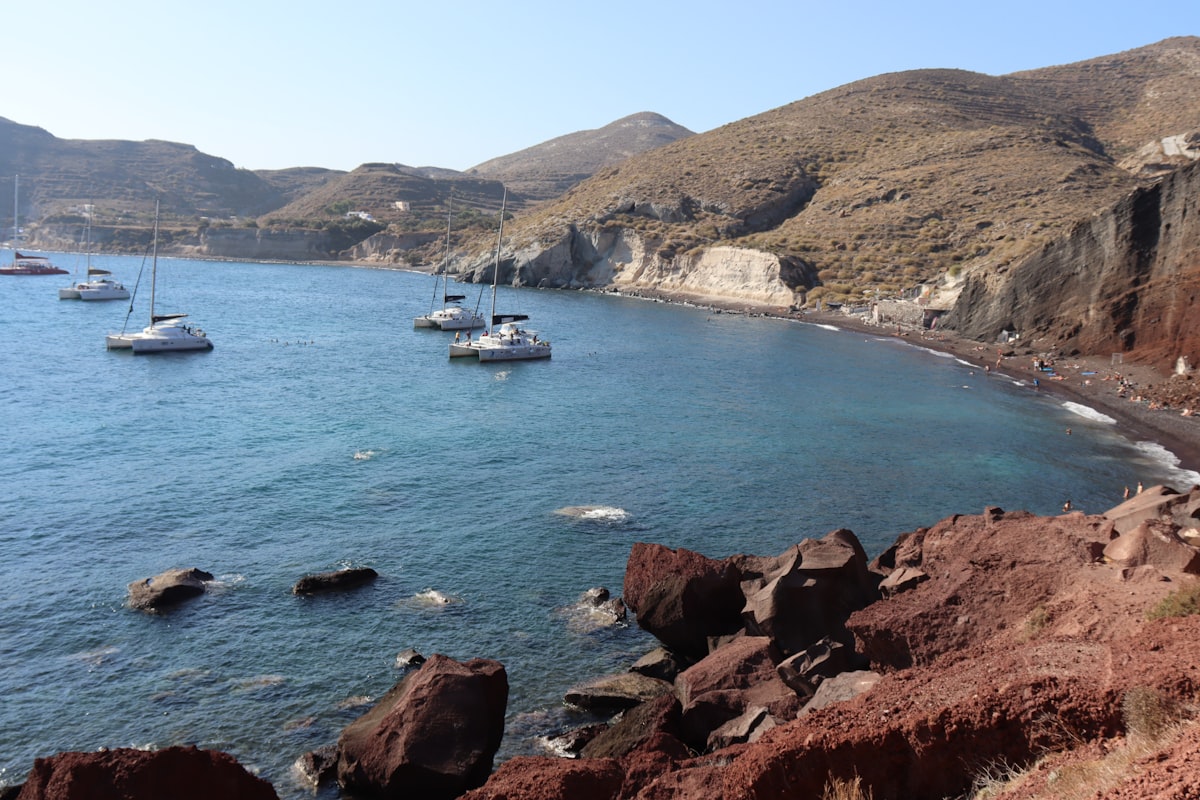
Red Beach: Near Akrotiri village, enormous red volcanic cliffs collapse directly into the sea above a crescent of dark-red pebbles. The access path (10-minute walk from the parking area) passes below unstable cliffs — check for closure notices before heading down. No entrance fee; sunbeds €8/pair. One of the most dramatic beach settings in Europe.
Black Beach (Perissa and Perivolos): A long sweep of volcanic black pebble beach on the south-eastern coast, backed by tavernas, beach bars, and watersports operators. Sunbeds €8–12/pair. The water is clear and deep quickly — good for snorkelling.
White Beach: Accessible only by boat (included in most caldera tours) or by water taxi from Red Beach (€5 each way). White volcanic rock cliffs above pale sand and turquoise water.
Museum of Prehistoric Thera (Fira)
Compact but genuinely world-class. The highlights are the gold ibex figurine, frescoes recovered from Akrotiri (including the famous Spring Fresco with swallows and lilies), and enormous painted storage jars. Don't skip it — the context it gives for Akrotiri is invaluable.
Hours: Daily except Tuesday, 08:30–15:30. Entrance: €10 (included in the €14 combo ticket).
Wine Tasting
Santorini's volcanic soil — a mix of pumice, lava ash, and sand — produces Assyrtiko grapes with a flavour profile found nowhere else on earth. The vines, some over 200 years old, are trained into low basket shapes (called kouloura) to protect them from the island's fierce Meltemi winds. A winery visit including tastings costs €15–40 and usually includes 4–6 wines with small food pairings.
Top wineries: Domaine Sigalas near Oia (biodynamic, the most serious producer on the island), Venetsanos Winery (a beautifully converted 1947 tomato factory with dramatic mid-caldera views), Santo Wines (excellent caldera-view terrace, very popular — book ahead). All three welcome walk-in visitors in shoulder season but require advance booking in July and August.
Hidden Gems
Pyrgos: The island's highest village and its medieval capital. Venetian kastro ruins crown the summit; the 360° view from the top rivals Oia's famous panorama with a fraction of the people. The restaurants in Pyrgos are the island's best: Selene (the most serious dining on Santorini, focusing on local Cycladic ingredients) and Cava Alta (rooftop with village views, excellent creative Mediterranean mezedes). 15 minutes by ATV from Fira.
Imerovigli at dawn: Walk the caldera path at 06:00 and you'll have it almost entirely to yourself. The light is extraordinary — apricot and gold on the caldera walls, still and cool before the heat sets in.
Vlychada Beach: On the south coast, pumice cliffs eroded into alien, cave-riddled formations back a quiet grey-pebble beach that attracts almost no foreign tourists. A small marina, a beach taverna serving honest fried fish, and not a sunbed salesperson in sight.
Ammoudi Bay: A tiny fishing harbour 215 steps directly below Oia. Octopuses hang drying on lines above the waterside tables. The seafood here — grilled red mullet, fried calamari, sea urchin on bread — is some of the best on the island, at half the price of the caldera-rim restaurants above. Finish with a swim off the rocks. Return to Oia on foot (the steps) or by donkey (€5, though animal welfare standards vary and walking is better).
Where to Eat & Drink
Budget (under €15/person): Inland village tavernas are the key. In Fira, the souvlaki and gyros stalls near the central square charge €3–4. Nikolas Taverna in Fira has served grilled fish and traditional Greek meze for three generations with consistent quality and zero tourist markup — no caldera views, no pretension, just honest food.
Mid-range (€25–50/person): Roka in Oia — excellent food away from the main tourist drag, consistently rated by locals. Ouzeri in Fira for traditional small plates (meze) and a good house wine list. Cava Alta in Pyrgos for rooftop dining with village views and creative Mediterranean sharing plates.
Fine dining (€60–120+/person): Selene in Pyrgos is the island's most serious restaurant, serving a menu built entirely on Cycladic and Santorinian ingredients — local cheese, capers, cherry tomatoes, fava from Santorini's volcanic soil. Book 2–3 weeks ahead in season. Athenian House in Imerovigli offers Michelin-calibre execution with caldera views and strong plant-based options.
Coffee and dessert: Meliní in Oia for traditional loukoumades (honey doughnuts fried to order, €4–5 a bowl) — the queue is always worth it. For wine-bar sundowners with local producers, Kapari Wine Restaurant in Imerovigli has the most comprehensive Santorini-producer selection in one room.
Meal cost guide (2026):
- Gyros / fast food: €3–5
- Taverna lunch or dinner (meze + wine): €18–35 per person
- Mid-range restaurant: €30–55 per person
- Fine dining: €70–130+ per person
Practical Travel Tips
Currency: Euro (€). ATMs are plentiful in Fira and Oia; scarcer in beach villages. Carry €30–50 in cash for smaller tavernas, site admission, and bus fares (the KTEL machines sometimes only take cash).
Tipping: Not obligatory, but appreciated. Rounding up the bill or leaving 8–10% at restaurants is the norm for good service. Taxi drivers don't typically expect tips.
Visa requirements:
- EU/EEA citizens: No visa required.
- UK citizens: 90 days within any 180-day period (Schengen rules post-Brexit). Passport must be valid for at least 3 months beyond your return date.
- Indian citizens: Schengen short-stay visa required. Apply at the Greek Embassy or consulate, allow 3–4 weeks processing time. Fee: €80. Supporting documents include confirmed hotel bookings, return flights, travel insurance, and bank statements.
Language: Greek is official. English is widely spoken in all tourist areas. Learning a few words goes a long way: kalimera (good morning), efcharistó (thank you), parakálo (please / you're welcome).
Connectivity: Pick up a prepaid SIM at Athens or Santorini airport — Cosmote and Vodafone Greece offer tourist SIMs (5–10 GB, €15–25). EU-issued SIMs work within roaming allowances. Wi-Fi is reliable in all hotels and most restaurants.
Overtourism rules (2026): Greece introduced daily port restrictions in 2026 limiting cruise ship disembarkations on Santorini to 8,000 passengers per day. If arriving by cruise ship, book shore excursions in advance — the cap means popular tours sell out at the quay. Independent travellers are unaffected.
Health: The European Health Insurance Card (EHIC for EU, GHIC for UK) covers emergency care at state facilities in Greece. Travel insurance is still strongly recommended — a medical evacuation helicopter to Athens is expensive. The island's private clinic (Iatriko Santorinis, Fira) handles most tourist medical needs.
Packing essentials: Sturdy walking shoes for the Fira–Oia trail and Akrotiri site (cobbles are uneven). Reef shoes or water shoes for Red Beach's pebbles. SPF 50+ sunscreen — the Mediterranean UV in summer is fierce and the open caldera path has little shade. A light layer for caldera evenings, which get breezy even in August.
Sample 3-Day Itinerary
Day 1: Arrival, Oia, and Ammoudi Bay
- 10:00 — Check in (Firostefani recommended as base)
- 11:00 — Walk the Fira–Firostefani–Imerovigli caldera path (2 hrs)
- 13:00 — Lunch in Imerovigli with caldera views
- 15:00 — ATV to Oia; explore the village before peak crowds
- 18:00 — Position at the Oia kastro for sunset (arrive early)
- 20:00 — Descend to Ammoudi Bay for dinner at the waterside tables
Day 2: Caldera Boat Tour and Pyrgos Wine & Dining
- 09:30 — Join a caldera boat tour from the Old Port (book the evening before)
- 09:30–15:30 — Nea Kameni volcano hike, hot springs swim, White Beach stop
- 16:30 — Wine tasting at Domaine Sigalas or Venetsanos Winery
- 20:00 — Dinner in Pyrgos at Selene or Cava Alta
Day 3: Akrotiri, Beaches, Museum
- 08:30 — Akrotiri Archaeological Site (beat the heat and the tour coaches)
- 11:00 — Red Beach (20-minute walk from Akrotiri)
- 13:00 — Beach lunch and swim at Perissa (black beach, good tavernas)
- 16:00 — Museum of Prehistoric Thera, Fira
- 18:00 — Sunset drinks on the Fira caldera rim
- 20:00 — Final dinner at Nikolas Taverna
Budget Breakdown
| Category | Budget | Mid-Range | Luxury |
|---|---|---|---|
| Accommodation (per night) | €65–90 (Kamari/Perissa) | €150–250 (Fira/Firostefani) | €400–800+ (Oia) |
| Meals (per day, all in) | €20–35 | €50–85 | €120–200+ |
| Transport (per day) | €5–10 (KTEL bus) | €25–35 (ATV hire) | €50–80 (car or taxis) |
| Activities (per day) | €10–25 | €35–70 | €100–200+ |
| Daily total (estimate) | €100–160 | €260–440 | €670–1,280 |
The boat tour (€35–70) and wine tastings (€15–40) are one-time additions worth budgeting for regardless of your overall spend category.
Final Thoughts
Santorini earns its reputation and punishes those who arrive without a plan. Book accommodation 3–6 months ahead for May–September. Nail down your Oia sunset strategy before you land (the castle fills fast). Visit Akrotiri on a morning — it'll be one of the trip's highlights regardless of your interest in archaeology. Hire an ATV for at least half a day. Eat inland at least once.
The caldera at golden hour, seen from the rim at Imerovigli with a glass of Assyrtiko in hand, the hot springs still warm on your skin from the morning's boat trip — it's one of those travel moments that stays with you for years. Santorini rewards patience, curiosity, and an early alarm clock.