Hallstatt, Austria: The Complete Travel Guide 2026
Why Hallstatt?
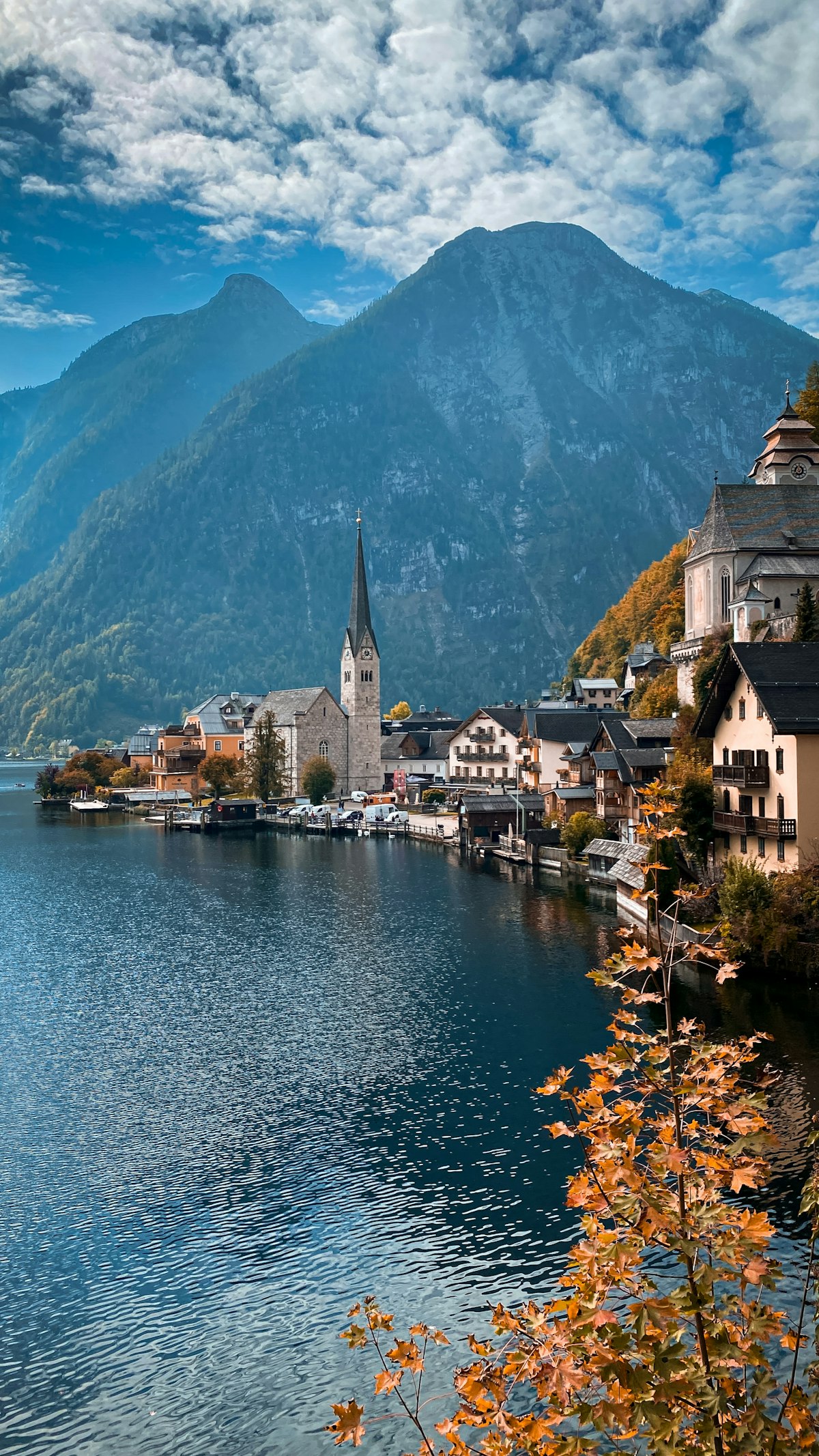
There are places you plan to visit and places that stop you mid-scroll — Hallstatt is the latter. Pressed between a mirror-still Alpine lake and a sheer limestone cliff face in Upper Austria's Salzkammergut region, this tiny village of barely 800 residents has been pulling travellers towards it long before the internet made it famous.
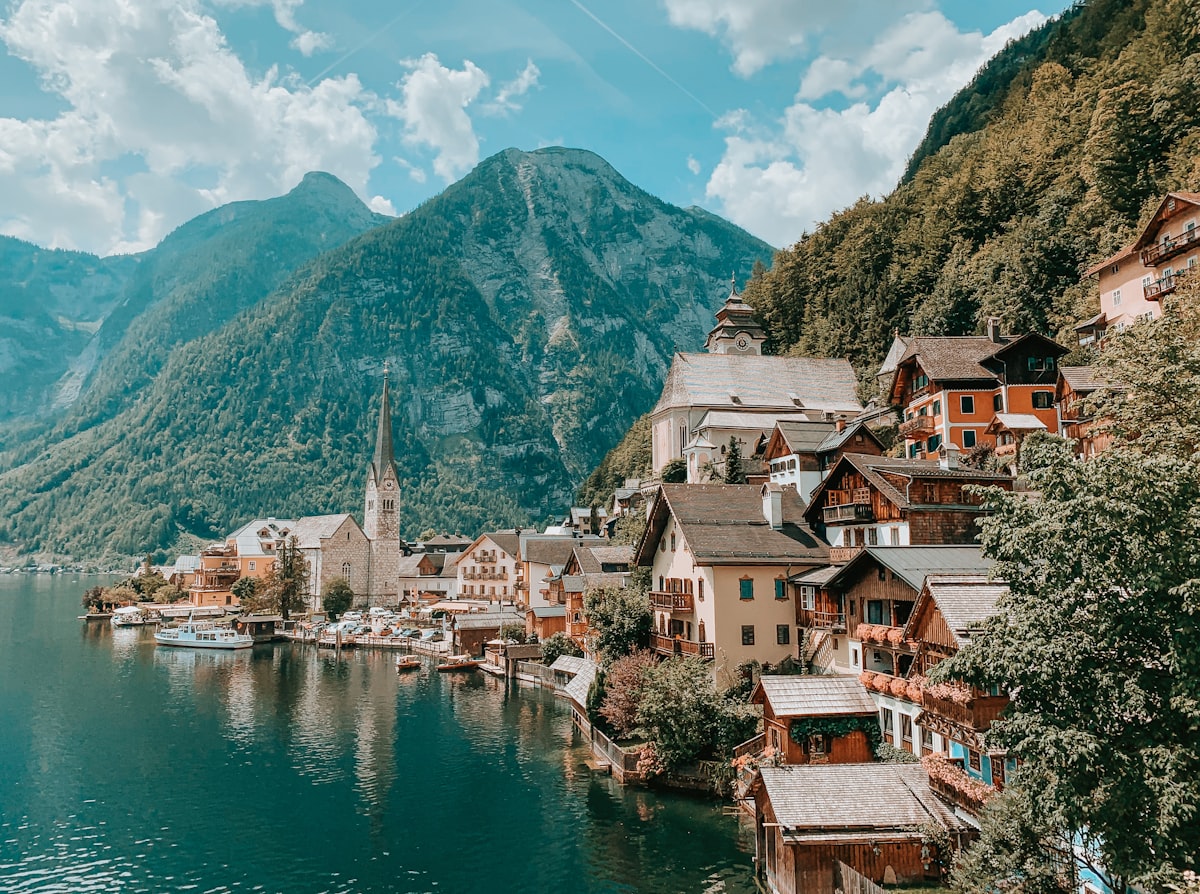
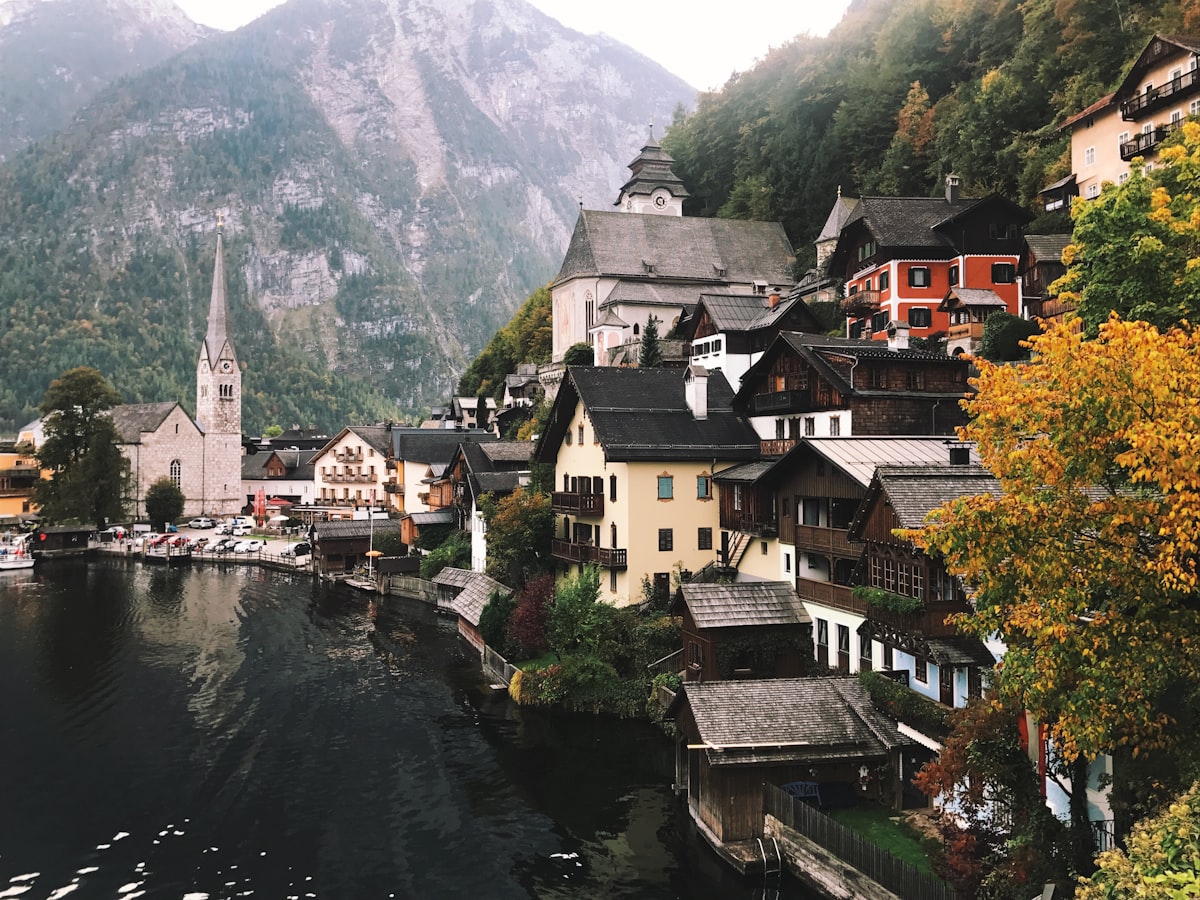
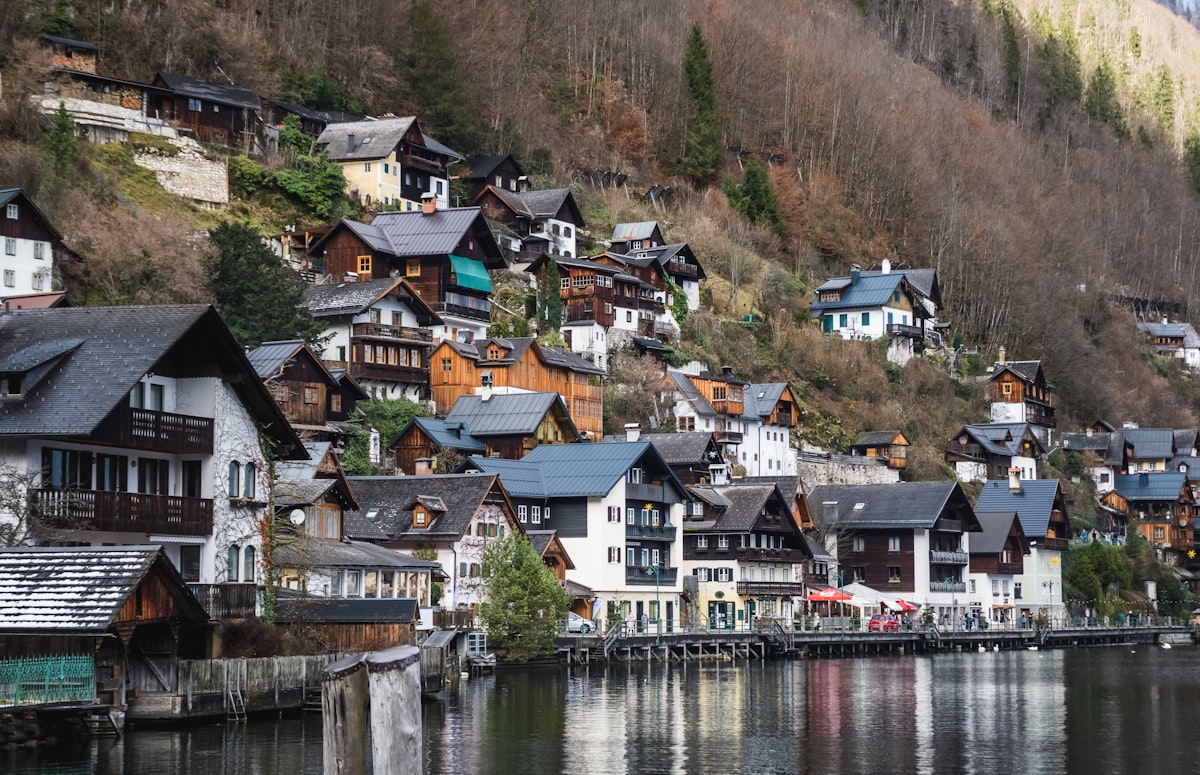
Hallstatt is so visually extraordinary that a Chinese developer replicated it, pastel houses and all, in Guangdong Province. Its 15th-century Gothic parish church reflects perfectly in the calm water every clear morning. Wooden houses cling to the hillside as if gravity is a negotiation, and the Dachstein mountains frame everything in snowy white for half the year.
But Hallstatt earns its reputation beyond the photographs. This is the heart of the world's oldest salt-mining culture — a continuous human settlement stretching back 7,000 years. The artefacts unearthed in the hills above the village gave their name to an entire era of European prehistory: the Hallstatt Period (800–450 BC). You can stand at a tunnel entrance on the mountain above the village and reach through 70 centuries.
Yes, it gets crowded from June through August. Yes, tour buses arrive at 9 am. But stay overnight, walk the lake path at dawn, and you will find a quieter, more intimate Hallstatt that rewards every minute you give it.
When to Visit
Spring (April–May): The best-kept secret. Snowmelt keeps the lake at its highest and most brilliantly blue, wildflowers carpet the meadows approaching Hallstatt, and visitor numbers are 60–70% lower than peak summer. Temperatures 10–18°C — ideal for walking.
Summer (June–August): Warmest and most lively. Lake swimming (water reaches 20–22°C in July), full attraction access, and the longest days. Arrive before 9 am or stay until after 6 pm to outpace the coach tours.
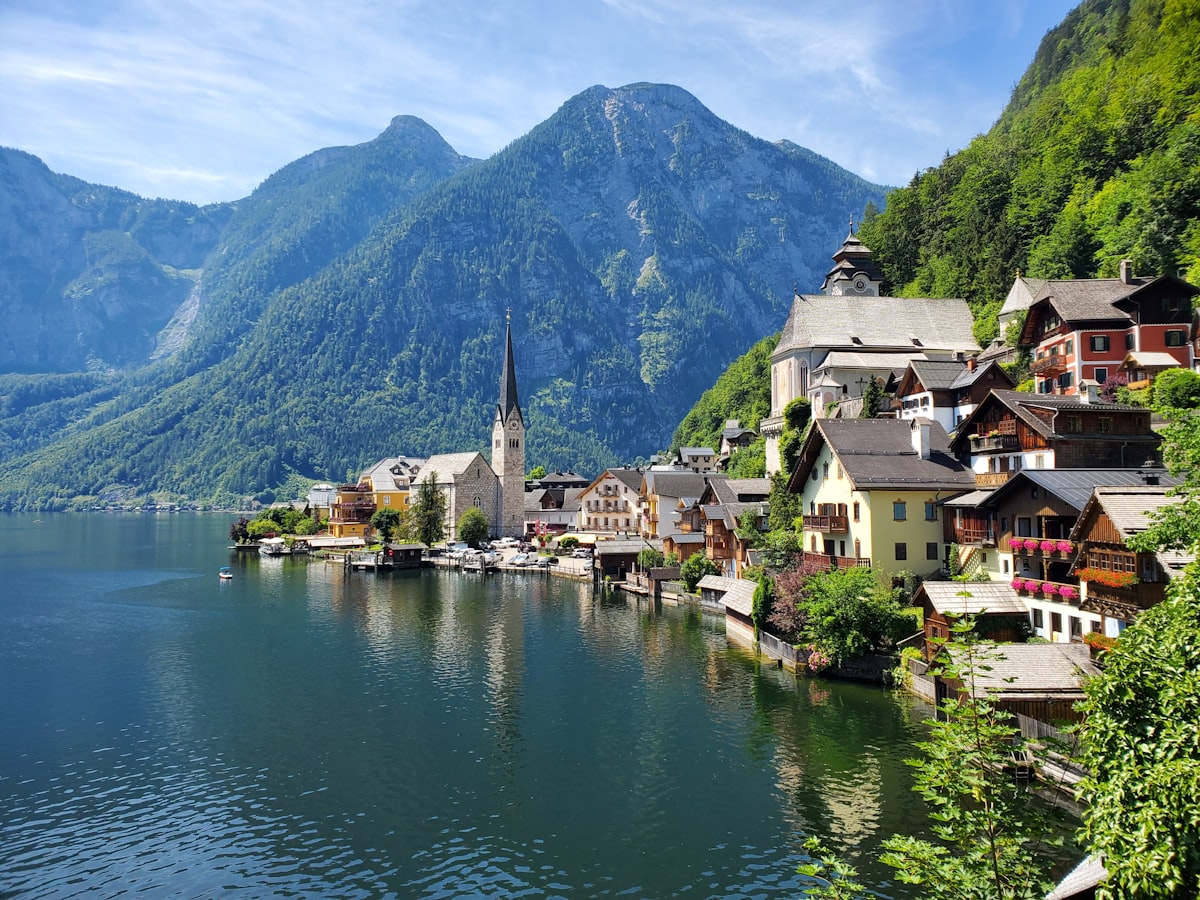
Autumn (September–October): A local favourite. The larches turn gold on the surrounding mountains, lake reflections are at their most dramatic, and crowds thin sharply after mid-September. Temperatures 8–15°C.
Winter (November–March): Fewest crowds, lowest prices, and an almost surreal atmosphere when snow settles on the village rooftops. Many restaurants keep reduced hours, and some attractions close or have shortened schedules — but for photographers and those after mood over convenience, winter Hallstatt is incomparable.
Best overall pick: A weeknight in late September. The village is nearly yours from dusk until mid-morning.
Note for 2026 visitors: Both the Hallstatt Salt Mine and the Skywalk viewing platform have been closed for renovation. Both are expected to reopen in summer 2026 — verify current status at salzwelten.at before booking.
Getting There
Hallstatt sits 75 km east of Salzburg and 280 km west of Vienna.
From Salzburg (the most popular gateway)
Train + Ferry — recommended. Take an ÖBB regional train from Salzburg Hauptbahnhof towards Attnang-Puchheim, then change onto the scenic Salzkammergut line to Hallstatt station. Total journey: about 2.5 hours. Tickets from €15 each way with advance booking (ÖBB Sparschiene fares).
The Hallstatt train station sits on the opposite side of the lake from the village. A small ferry (€3 one-way, timetables coordinated with train arrivals) carries you across in 5 minutes. That crossing — watching the pastel village come into focus across the water — is one of the finest arrivals in Europe.
By bus: Postbus route 542 runs from Bad Ischl to Hallstatt (30 min, €3–5). Combine with a train from Salzburg to Bad Ischl (40 min, from €12).
By car: A-1 motorway to Salzburg, then B158 via Bad Ischl. The village centre is car-free. Day visitors park at the Hallstatt-Lahn car park (€6–10/day) or the Park & Ride at Gosauseestraße and take a shuttle bus (€3 return, 10 min). Arrive before 9 am or you may find the car parks full in peak season.
From Vienna
Direct ÖBB trains to Attnang-Puchheim, then the Salzkammergut line. Total journey about 3.5 hours. Day-return tickets from €28 booked in advance.
From Munich
About 3 hours by car (A8, then A93, then B305). By rail, take an IC to Salzburg and continue as above — total journey roughly 4 hours.
Getting Around
Hallstatt rewards walkers. The entire village is a 20-minute walk from end to end, and almost everything worth seeing is within 10 minutes of the ferry dock.
On foot: The main lakeside promenade, the Marktplatz, the parish church, the Beinhaus, and the World Heritage Museum are all a short stroll from each other. Wear comfortable shoes — the old town's cobbled lanes have steep sections near the upper streets.
The Salzbergbahn funicular: Runs from the south end of the village up to the salt mine and Skywalk plateau. When fully operational: return ticket €29 adults, €14 children 4–15. Open April–October. Even if the mine and Skywalk are still closed when you visit, the summit walk and Rudolfsturm are accessible with a funicular-only ticket.
Boat tours: Several operators run guided lake cruises in summer (€15–20 per person, 45 min). The view looking back at the village from the water is different — and better for photography — than any shot from the shore.
Regional buses: Postbus connects Hallstatt to Bad Ischl (30 min, €3), Gosausee (20 min, with a short walk), and Obertraun (10 min, €2). A convenient way to explore the wider Salzkammergut.
Where to Stay
Accommodation in the village itself is limited and books out months ahead in summer. Don't leave it late.
In the Village (Premium)
Heritage Hotel Hallstatt — Lakefront rooms in a beautifully restored 19th-century building, central location, polished service. Expect €220–320/night in July–August, €130–190 in shoulder season. Book directly for best rates.Seewirt Zauner — Family-run since 1893, right on the Marktplatz. Rooms from €160–250/night. The buffet breakfast with lake views is exceptional. Reserve a waterside room.
Bräugasthof Lobisser — Historic inn near the waterfront, more atmospheric than polished. Rooms from €110–180/night with a reliable ground-floor restaurant.
Better Value Nearby
Obertraun (3 km, reachable on foot along the flat lakeside path or by Postbus): Pension rooms €60–100/night, free parking, and you get the peaceful lake walk into the village each morning largely to yourself.Bad Ischl (15 km, on the train line): Hotel options from €80–150/night. A proper small town — former imperial summer retreat with a charming old town — and a useful base for exploring the whole Salzkammergut region.
Top Attractions
1. Marktplatz (Market Square)
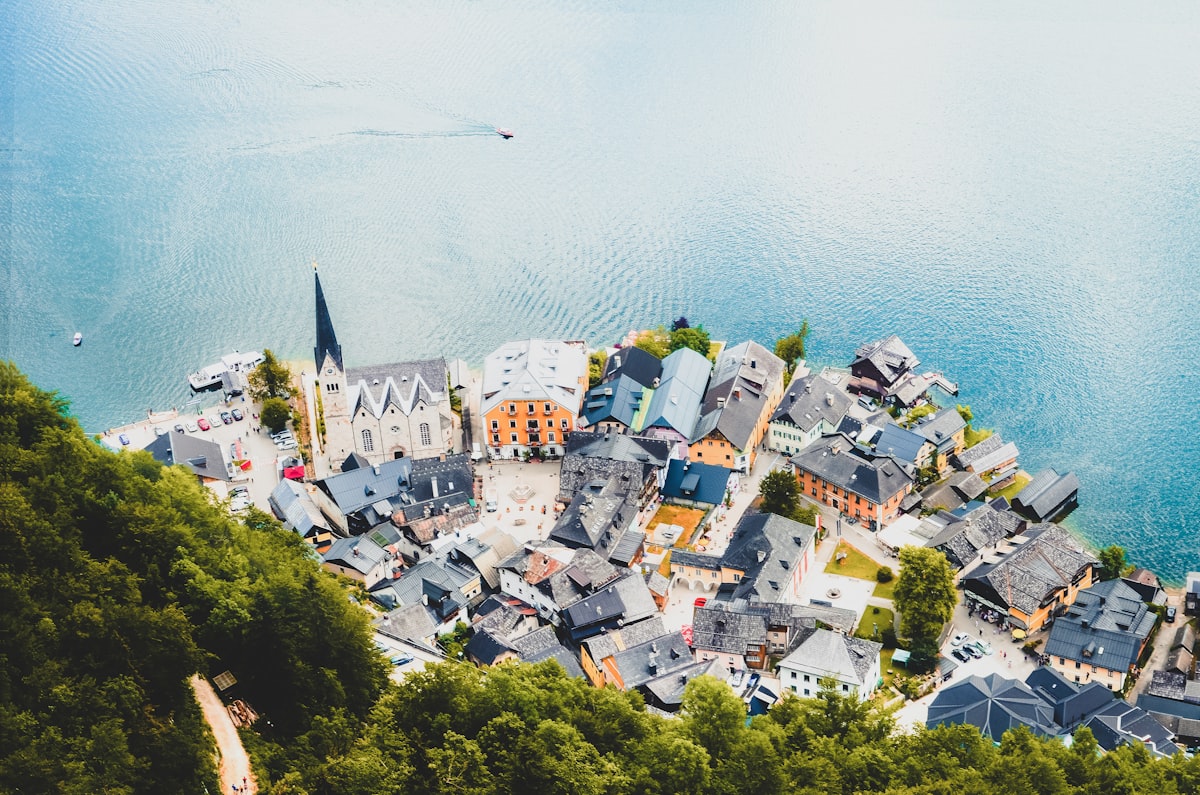
Hallstatt's living heart: a crescent of pastel-painted merchant houses dating to the 16th–18th century, framed by the 15th-century Gothic parish church of Maria am Berg and the 18th-century Holy Trinity column at the centre. Free entry, always accessible. Come before 9 am for unobstructed photographs, or return after 5 pm when the day-trippers have left and the light softens.
2. Hallstatt Salt Mine (Salzwelten)
The world's oldest active salt mine — continuous extraction going back 7,000 years. Underground passages, a 64-metre miners' slide, an underground salt lake, and Bronze Age artefacts from the tunnels themselves. Closed for renovation until summer 2026. Check salzwelten.at for the reopening date.
When open: combined ticket (funicular + mine) €49 adults, €23 children 4–15. Allow 2.5 hours including the funicular.
3. Hallstatt Skywalk
A cantilevered glass viewing platform perched 360 metres above the village, adjacent to the 13th-century Rudolfsturm (Rudolf Tower). On a clear day you see the full sweep of Hallstätter See, the village far below, and the Dachstein glacier beyond. Also closed for reconstruction — reopening summer 2026.
The funicular still runs to the summit station. Even without the Skywalk, the terrace at Rudolfsturm restaurant and the summit walking trails offer extraordinary views.
4. World Heritage Museum
A thoughtfully designed museum in the village centre tracing Hallstatt's history from Neolithic settlers through the Celtic Iron Age to the modern village. The genuine Bronze Age jewellery and tools pulled from the salt mine tunnels are quietly extraordinary — small objects carrying the weight of millennia. One of the best small museums in Austria.
Admission: Adults €12, Children €8. Hours: May–September 10:00–18:00; off-season 10:00–16:00 (closed some January days — check ahead).
5. The Beinhaus (Bone House / Charnel House)
One of Austria's most unusual sights. The Catholic cemetery beside the parish church is tiny — the village has always had too little flat ground for burials. The traditional solution, practised here since the 17th century, was to exhume bones after 10–15 years, bleach the skulls in moonlight, paint them with names, death dates, and floral motifs, and stack them in the small chapel beside the cemetery. Roughly 1,200 painted skulls remain. The last skull was added in 1995.
Free entry. Open daily 10:00–18:00 in summer, 11:30–15:30 Wednesday–Sunday in winter.
6. Hallstätter See (The Lake)
The lake itself is unmissable. Glacier-fed, pristine, and a deep theatrical blue-green that shifts with the light and the angle of the surrounding mountains. In summer you can swim from small pebble beaches near the Lahn area at the south end of the village; water temperatures reach 20–22°C in July–August. Kayak and stand-up paddleboard rentals are available at lakeside sports shops for €12–18/hour. Even if you do nothing but sit at the lakeside and watch the mountains reflect, an hour passes without effort.
Hidden Gems
Waldbachstrub Waterfall
A 2.9 km walk from the south end of the village — about 45 minutes each way — along the flat Waldbach stream through dense beech and pine forest. The trail ends at a 90-metre waterfall crashing into a narrow, mossy gorge. Almost no one outside locals walks this trail before 10 am. Free, no signage needed: follow the stream south from the Lahn area.
Archaeological Excavation Site
Beneath the Dachsteinsport Janu sporting goods shop on Seestrasse is a glass-floored walkway above an active Bronze Age archaeological dig. The juxtaposition — modern hiking equipment displayed above 3,000-year-old artefacts — is genuinely strange and worth 10 minutes. Free; open daily 9:00–17:00.
Christuskirche (Evangelical Church)
Most visitors focus on the Gothic Catholic parish church on the Marktplatz. The quieter Lutheran Christuskirche, built in 1863 on the lake's edge, has beautiful stained glass and a colonnaded lakeside porch that catches the morning light in a way almost no one photographs. Free; open daily 10:00–18:00.
The Lakeside Walk to Obertraun
Instead of taking the Postbus to Obertraun (3 km south), walk the flat lakeside path. It passes through reeds and willows with the Dachstein massif dominating the view across the water. Better photography than anything in the village, and you'll likely have it almost to yourself outside peak hours.
Where to Eat & Drink
Hallstatt has around 15–20 restaurants and cafés. With high visitor numbers and limited competition, prices run 15–25% above equivalent food in a non-tourist Austrian town. Budget accordingly.
Bräuhaus Hallstatt — The closest thing to a local pub: Wienerschnitzel, Tafelspitz, and lake trout (sourced from Hallstätter See) at honest prices. Lunch mains €14–22. The Stiegl lager is well-kept. Book dinner in summer.
Gasthof Simony — Lakefront terrace, the most coveted table in the village. Grilled trout, pumpkin cream soup, apple strudel. Mains €18–28. Reserve in advance and budget for a long, unhurried lunch.
Rudolfsturm (Summit Restaurant) — Accessed by funicular, this medieval tower-turned-restaurant serves Austrian classics with the single best view in the area. Mains €16–24. Worth the funicular fare purely for a coffee and Apfelstrudel on the panoramic terrace.
Café am See — Casual café right at the ferry landing, one of the few places open from 7:30 am. Pastries, sandwiches, coffee, local apple juice. Perfect for an early breakfast before the crowds. Budget €8–14.
Bäckerei (local bakery): There is a small bakery in the village selling fresh Laugenbrötchen (pretzel rolls), Germknödel, and pastries. A bag of fresh bread and local cheese from the minimarket makes a superb lake-view picnic.
Spar minimarket: One small Spar near the Lahn parking area. Buying picnic supplies here saves significantly on meals without sacrificing the setting.
Daily food budget per person:
- Budget (café breakfast, supermarket picnic, one restaurant meal): €35–50
- Mid-range (two casual sit-down meals): €60–90
- Splurge (Simony lunch + Rudolfsturm dinner): €100–130
Practical Travel Tips
Currency: Euro (€). Cards accepted almost everywhere; bring €5–10 cash for the ferry and small purchases.
Language: German. Most hotel and restaurant staff speak English. A "Danke schön" or "Bitte" goes a long way.
Tipping: Not mandatory but appreciated. Round up on small purchases; 10% on restaurant meals is generous.
Crowds: The worst window is 10 am–4 pm daily from late June through August, when coach tours from Salzburg and Vienna arrive. The village transforms at dusk — by 6 pm the day-trippers are gone and Hallstatt belongs to its overnight guests.
Photography: Handheld photography is unrestricted everywhere. Drone operation requires a permit in the UNESCO World Heritage area — do not fly without one. The classic shot: stand at the southern end of the village (near the boat house) with a wide lens at sunrise.
Hallstatt Card: Available from the tourist office for €29. Covers funicular + salt mine admission and 25% discounts on the museum, boat tours, and some restaurants. Good value when the mine is open.
Weather: Alpine weather is changeable regardless of season. Pack a light rain jacket and layers even in summer — the lake can amplify wind, and afternoon thunderstorms are common in July and August.
Visa: Austria is in the Schengen Area. EU/EEA citizens need only a national ID card. UK, US, Australian, and Canadian passport holders may visit up to 90 days without a visa. Indian passport holders require a Schengen visa — apply at the Austrian Embassy at least 6 weeks before travel. Fees typically €80.
Sample 3-Day Itinerary
Day 1: Arrival and the Village
- Arrive by afternoon ferry from the train station — enjoy the 5-minute lake crossing
- Check in and drop bags; the village takes about 20 minutes end to end
- Walk the Marktplatz at golden hour (6–7 pm); photograph the church reflection when the water is calm
- Dinner at Bräuhaus Hallstatt — order the lake trout
Day 2: The Mountain and the Museum
- 7:30 am: Early breakfast at Café am See before the coach tours arrive
- 9:00 am: Funicular up to the salt mine plateau
- Morning: Salt mine tour (when open) or the Rudolfsturm summit walk and terrace
- Lunch: Rudolfsturm restaurant with panoramic terrace
- Afternoon: Walk down (40 min through the forest) or take the funicular back; visit the World Heritage Museum
- Late afternoon: Beinhaus chapel; Christuskirche
- Evening: Lakeside walk at dusk; kayak if the light holds
Day 3: Hidden Hallstatt
- 6:30 am: Walk the lakeside path to Obertraun and back (1.5 hours, entirely flat) before breakfast
- 9:00 am: Walk to Waldbachstrub Waterfall (90 min return)
- Lunch: Gasthof Simony lakefront terrace
- Afternoon: Archaeological excavation site; final slow walk along the Marktplatz promenade
- Catch the 4:30 pm ferry across to the train for onward travel
Budget Breakdown
| Category | Budget | Mid-Range | Splurge |
|---|---|---|---|
| Accommodation per night | €65 (Obertraun pension) | €170 (village guesthouse) | €280 (Heritage Hotel) |
| Food per day | €35–50 | €60–90 | €100–130 |
| Attractions (2-day total) | €12 (museum only) | €49 (funicular + mine) | €70 (Hallstatt Card) |
| Transport Salzburg return | €32 (train + ferry) | €32 | €90 (private transfer) |
| 2-night total (per person) | ~€210 | ~€460 | ~€830 |
Final Thoughts
Hallstatt can feel like a film set — too perfect, too composed, occasionally too busy. And yet it earns every superlative. The salt mine history is genuinely fascinating. The lake on a clear morning is genuinely extraordinary. The walk to Waldbachstrub is genuinely peaceful.
The formula is simple: come in shoulder season, stay at least one night, and be at the lakefront before 8 am. The village looks completely different when the ferry hasn't arrived yet, the mist is still lifting off the water, and the mountains are just catching the first light.
Do that, and Hallstatt stops being a photograph and starts being a memory.